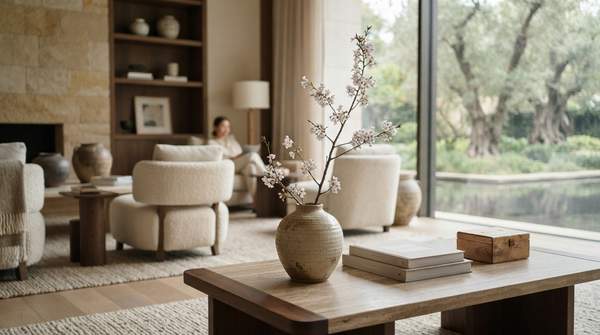
I remember the pre-pandemic symphony of a luxury flagship on a Saturday afternoon. It was a sensory overload in the most deliberate way: the scent of expensive leather mingling with the house perfume, the low hum of hushed conversations, the almost imperceptible weight of a velvet curtain. It was a space designed for aspiration, for the many to brush against the lifestyle of a few. Today, that grand theatre feels like a memory from another era. The profound luxury retail evolution is not about emptiness, but about a new kind of presence. It’s a shift from a crowded stage to an intimate salon, driven by fundamental changes in consumer behavior and market dynamics that are quietly redrawing the map of desire. A recent 2026 Global Luxury Industry Outlook report from Kearney confirms this subtle tectonic movement, suggesting the industry is not in decline, but in a "normalization phase" that favors depth over breadth.
What Changed: The End of Unfettered Aspiration
The inflection point was not a single event, but the quiet denouement of a post-pandemic spending spree. That period of "revenge buying" created a temporary illusion of an ever-expanding luxury market, welcoming a flood of new, aspirational consumers. That tide has now receded, revealing a landscape fundamentally altered. The catalyst for the current transformation is a contraction of the global luxury customer base. According to Kearney's report, spending is becoming more concentrated and far more intentional. This is not a market crash; it is a recalibration.
The old model, predicated on a perpetually growing base of entry-level luxury shoppers, has fractured. The very definition of luxury is bifurcating. On one end, certain elements—logos, accessible accessories, fragrances—are becoming democratized, their mystique diluted through mass exposure. On the other, true exclusivity is becoming scarcer, retreating into bespoke experiences, unparalleled craftsmanship, and deeply personal relationships. The brands that thrived on volume and visibility are now facing a stark new reality. The consumer who once bought a logo-emblazoned handbag as a status symbol is being replaced by a connoisseur who seeks a narrative, a connection, and a clear articulation of value that transcends the price tag.
This shift is also being accelerated by a generational transfer of wealth and taste. Younger, digitally native consumers approach luxury with a different set of criteria. As noted in a market analysis by Vocal Media, sustainability and ethical sourcing have become key considerations, leading to increased demand for responsibly sourced materials. This ethical calculus, once a niche concern, is now a central pillar of the value proposition for a growing segment of the market. The story behind the object—its provenance, its impact, its creator's vision—has become as important as the object itself.
The Impact of Changing Consumer Behavior on Luxury Brands
The contrast between the previous era and the current one is stark, touching every facet of how luxury brands operate, from client acquisition to product creation. The former strategy of casting a wide, aspirational net is being replaced by the precision art of cultivating a select few. This evolution represents a pivot from a transactional mindset to a relational one, where the lifetime value of a client eclipses the seasonal sales target. This is a fundamental rewriting of the retail playbook, where data-driven intimacy and authentic engagement become the new currency.
We can observe this transformation across several key metrics, which illustrate a systemic shift in priorities and practices. The focus has moved from the tangible storefront to an intangible, yet powerful, client relationship that exists across multiple platforms. Creativity is also under immense pressure, with Kearney reporting that last year witnessed three times as many changes of creative directors as previous years, signaling a frantic search for relevance in this new landscape.
| Metric | Before (The Aspirational Era) | Now (The Normalization Era) |
|---|---|---|
| Customer Base | Broad and expanding; high volume of first-time, aspirational buyers. | Concentrated and contracting; spending is consolidating among top-tier clients. |
| Core Statistic | Growth driven by attracting new consumers from emerging middle classes. | The top 2 percent of clients now account for nearly half of total spend, according to Kearney. |
| Key Revenue Driver | High-volume sales of iconic, entry-level products and seasonal trend items. | "Relationship Revenue," focused on lifetime client value and hyper-personalization. |
| Primary Touchpoint | The physical flagship store as a brand temple and primary sales channel. | An integrated omnichannel experience: private appointments, AR, and exclusive digital content. |
| Consumer Motivation | Status acquisition, brand association, and participation in a visible trend. | Value alignment (ethics, sustainability), creative expression, and deep, personal brand engagement. |
Winners and Losers in the New Luxury Landscape
In any significant market shift, a new hierarchy emerges. The winners in this luxury retail evolution will be the brands that demonstrate agility, creativity, and a genuine understanding of the new consumer psyche. The losers will be those who cling to the outdated playbook of mass aspiration. The dividing line is drawn between brands that sell products and brands that cultivate relationships.
Among the clear winners are the sectors and companies that have seamlessly integrated technology not as a gimmick, but as a core component of the client experience. The fine jewelry industry provides a compelling case study. Innovations like 3D printing and augmented reality (AR) are transforming both design and retail. A client can now use AR to virtually try on a bespoke necklace from their living room, appreciating the play of light on a responsibly sourced diamond with startling realism. This fusion of technology and personalization has fueled the rapid expansion of online jewelry sales. The United States jewelry market, which reached USD 78.9 billion in 2025, is projected to grow to USD 115.5 billion by 2034, demonstrating the power of this adaptive model.
Brands that prioritize what has been termed "Relationship Revenue" are also poised for success. This concept, highlighted by retail analysts at Proximity Insight, moves beyond simple CRM to foster a continuous, value-added dialogue with top clients. This includes offering exclusive access, personalized styling, and services that anticipate needs before they are even expressed. These are the brands that understand their top 2% of clients are not just customers, but patrons who expect a commensurate level of recognition and service.
Conversely, the brands at risk are those built on a high-volume, low-engagement model. The mid-tier luxury players and diffusion lines that relied on aspirational buyers for growth are now facing the strongest headwinds. Their value proposition—offering a taste of luxury without the full price tag—is less compelling in a market where consumers are either saving for a true investment piece or forgoing the category altogether. Furthermore, brands slow to adopt a sophisticated digital infrastructure will be displaced. As Kearney reports, AI is rapidly evolving from a peripheral experiment to a central nervous system for the industry, influencing everything from product discovery to supply chain management. Those who fail to invest will become invisible to the modern luxury consumer.
Expert Outlook: An Industry Forged by AI and Intention
Looking toward 2026 and beyond, analysts do not foresee a recession for luxury, but rather a period of sustained, albeit slower, growth. Kearney's forecast of 2 to 4 percent growth in 2026 reflects an industry that is maturing. This growth will not be evenly distributed; it will be captured by brands that earn their relevance through what the report calls "creativity, clearer value, and deeper consumer engagement." The era of coasting on brand heritage alone is over.
Artificial intelligence stands as the most significant technological force on the horizon. Its role will transcend simple e-commerce recommendations. AI will become the primary filter through which consumers discover and interact with brands, creating hyper-personalized journeys at a scale previously unimaginable. This has led some, like analysts cited by the Dubai Chronicle, to suggest that consumer choice may no longer be entirely their own, shaped instead by sophisticated algorithms that curate desire itself. This presents both a powerful opportunity for engagement and a complex ethical terrain for brands to navigate.
The global picture also reveals regional nuances. While the overall customer base is contracting, the Asia Luxury Goods Market continues to be a critical arena for growth and innovation, with its own unique trends and consumer behaviors shaping the future. Success will require a granular understanding of these local markets, rather than a monolithic global strategy. Ultimately, the future of luxury retail belongs to the brands that can orchestrate a perfect alchemy of data-driven precision, human-centric service, and an unwavering commitment to creative and ethical excellence. The narrative of luxury is being rewritten, and only the most articulate storytellers will thrive.
Key Takeaways
- Concentration Is the New Scale: The luxury market is pivoting from broad, aspirational appeal to a deep, sustained focus on a smaller, higher-spending clientele. The top 2% of clients now drive nearly half of all sales, making high-touch clienteling essential.
- Digital and Ethical Are Foundational: Technology like AI and AR are no longer optional add-ons but core infrastructure for the modern luxury experience. Simultaneously, consumer demand for sustainability and ethical sourcing has become a primary driver of purchasing decisions.
- "Relationship Revenue" Is the Future: The most successful brands will be those that move beyond transactional sales to cultivate long-term, personalized relationships. Success is now measured in lifetime client value and deep engagement, not just seasonal revenue.
- The Market Is Normalizing, Not Declining: The post-pandemic boom is over, but the luxury sector is stabilizing into a phase of steady, more intentional growth. Projections of 2-4% growth for 2026 will reward brands that adapt to the new, more discerning consumer mindset.