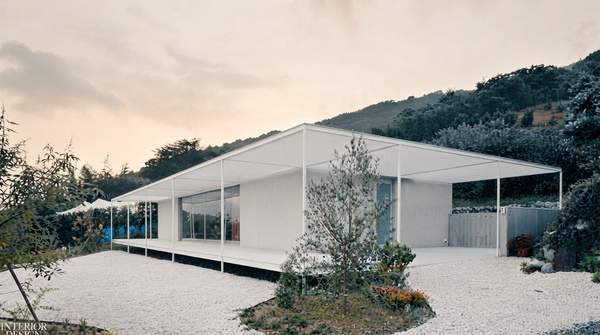
Emerging in the mid-20th century, Brutalist architecture, with its raw, unadorned concrete, has provoked strong reactions for decades. Celebrated by some for its honesty and condemned by others for its perceived coldness, its monolithic forms punctuate cityscapes worldwide. These powerful, often misunderstood, monuments reflect a specific era of social and aesthetic thought, raising the question of how such buildings are considered works of art.
The film 'The Brutalist,' which Archinect notes follows an architect in postwar America, demonstrates the style’s enduring power as a metaphorical canvas for themes of ambition and survival. This re-evaluation of Brutalism's legacy reflects its foundational ideas and the world that shaped it, a style where the object demands attention and defies indifference.
What Is Brutalist Architecture?
Brutalist architecture is a movement that flourished from the 1950s to the 1970s, characterized by its use of raw, unfinished materials, most notably exposed concrete. The name itself is a clue to its ethos; it derives from the French phrase béton brut, meaning "raw concrete," a term used by the Swiss-French architect Le Corbusier to describe the board-marked concrete finish on many of his later buildings. The term was further popularized by the British architectural critic Reyner Banham in the 1950s, who used it to define a new, ethically driven approach to design.
Brutalism rejects ornamentation and superficial finishes, instead revealing a building's very bones. On a massive, often public, scale, it leaves visible the texture of wooden molds used to pour concrete, the seams where sections meet, and the structure's functional components. This approach creates a powerful, tectonic quality, making the building’s construction its primary aesthetic expression.
- Material Honesty: The predominant use of raw, unfinished materials, especially béton brut. Brick, steel, and glass are also used, but always in a way that showcases their natural state.
- Massive and Monolithic Forms: Brutalist buildings often feature heavy, blocky forms and a sense of monumentality. They convey a feeling of permanence and strength.
- Expressive Structures: The functional and structural elements of the building—beams, columns, and service cores—are often exposed and exaggerated to become a dominant visual feature.
- Geometric Rigidity: The style heavily favors bold, graphic, and often repetitive geometric shapes, creating complex and visually striking facades.
- Focus on Functionality: As with other modernist movements, form follows function; however, in Brutalism, the functional purpose of a space is often overtly expressed in the building’s exterior form.
The Historical Origins and Evolution of Brutalism
Brutalist architecture emerged as a direct response to the devastation and social upheaval of the Second World War. Nations across Europe, especially the United Kingdom and Soviet-bloc countries, urgently needed practical, cost-effective, and efficient construction for rebuilding. This context, according to How to Rhino, made concrete—an affordable, widely available material—an ideal choice for large-scale housing projects, government buildings, and universities.
This post-war period was also one of profound social idealism. Many architects saw Brutalism as a way to create a more egalitarian and honest architectural language for a new society. By stripping away the decorative styles associated with the pre-war bourgeoisie, they aimed to create democratic, functional spaces for the public good. The style’s growth in communist nations, as noted by some analyses, was tied to this symbolism of equality, with concrete representing a common, unpretentious material for all. The focus was on community, utility, and a shared future built from the ground up.
The work of Le Corbusier is widely cited as a primary catalyst for the movement. His Unité d'Habitation in Marseille, France (completed in 1952), is a landmark project. This large-scale residential block, built with a rough, exposed concrete frame, embodied principles of communal living and structural honesty that would become central to Brutalism. As detailed by Dans Le Gris, Le Corbusier’s use of béton brut was not merely a practical choice but an aesthetic one, celebrating the material's texture and potential. In the United Kingdom, architects Alison and Peter Smithson further developed this ethos with projects like the Hunstanton School in Norfolk (completed in 1954), which starkly exposed its steel and brick structure, embodying what the Smithsons called "an ethic, not an aesthetic."
What Are the Core Principles of Brutalist Architecture?
Brutalism is defined by rigorous design principles that distinguish it from other modernism forms. Sharing a lineage with Bauhaus functionalism, it pushes structural honesty to a more radical conclusion. This philosophy manifests in concrete, brick, and steel, making the building’s truth its most prominent feature.
An uncompromising commitment to material truth defines Brutalism. It champions innate material qualities: concrete is not polished, but left with the wooden formwork's grain imprinted on its surface—a permanent record of its creation. This board-marking technique gives Brutalist surfaces a tactile, almost organic texture. For their Hunstanton School, the Smithsons articulated this philosophy, stating, as cited by Architizer, "It is our intention to have the structure exposed entirely, without interior finishes, wherever practicable." This approach prioritized integrity over mere austerity.
Legibility of form is a second principle: a Brutalist building is designed to be read. Its different internal functions—a library's reading rooms, a university's lecture halls, a government building's administrative offices—are often expressed as distinct volumetric blocks. This external, visible 'form follows function' approach allows observers to understand the building's purpose by its massing. Circulation paths like stairwells and elevated walkways are often articulated as separate, dramatic elements, celebrating movement and creating a clear, almost diagrammatic, architectural expression.
Brutalism embraces a monumental, sculptural quality. These heavy, grounded, and unapologetically present structures are not lightweight or transparent. Light and shadow interplay across their deeply articulated facades. Massive forms and unusual geometric shapes create dynamic tension, giving buildings a presence that can be both intimidating and awe-inspiring, transforming utilitarian structures into urban landmarks.
Why Is Brutalism So Controversial?
Brutalism elicits a polarized response. Detractors see the style as synonymous with urban decay, authoritarianism, and soulless bureaucracy. Vast, unadorned concrete surfaces can feel oppressive and alienating, especially when poorly maintained. Weathering stains concrete over time, creating a perception of neglect and grimness that has made many Brutalist buildings targets for demolition. Their monumental scale, once intended to inspire civic pride, can instead feel overwhelming and inhuman.
Conversely, a growing number of architects, designers, and enthusiasts celebrate Brutalism for the very reasons others dislike it. They find a profound beauty in its honesty and a poetic quality in its raw materiality. For them, the style represents a utopian moment of social ambition and architectural integrity. In a world of increasingly generic, glass-and-steel construction, Brutalist buildings stand out for their character, their tectonic force, and their refusal to be ignored. As one writer for Archinect describes the ethos, "Brutalist architecture is raw, powerful, emotional, and unapologetically honest." It rejects comfort in favor of a more visceral experience of space and material.
The controversy surrounding Brutalism highlights a central tension in architecture: the balance between aesthetic ideals and public perception. Architects may appreciate a building’s conceptual purity and structural honesty, but the daily experience of those who live and work in and around it is equally important. This clash demonstrates that buildings are not just static objects; they are active participants in the life of a city and its people, shaping their feelings as much as their functions.
Why Brutalist Architecture Matters
Brutalist architecture's legacy is evident in minimalist interiors celebrating raw materials like concrete and wood, product design prioritizing unadorned functionality, and new architectural projects employing bold, sculptural forms. Decades after its heyday, its principles of material honesty, structural expression, and functional clarity continue to resonate with contemporary designers, with its aesthetic now popular in photography, graphic design, and fashion.
Brutalist buildings are irreplaceable historical documents, telling the story of a specific 20th-century moment: an era of post-war reconstruction, social idealism, and faith in a technologically driven future. Preserving these concrete giants is not merely about protecting an aesthetic; it is about maintaining a connection to our collective urban and social history. As cities evolve, the ongoing debate over their demolition or preservation forces us to confront what we truly value in our built environment: historical integrity, aesthetic preference, or developmental potential.
Frequently Asked Questions
Why is it called Brutalist architecture?
The name "Brutalism" comes from the French phrase béton brut, which translates to "raw concrete." The term was famously used by the architect Le Corbusier to describe the exposed, board-marked concrete finish of his buildings, and it was later adopted by critics to define the broader movement that prioritized raw materials and structural honesty.
Is Brutalism a type of modernism?
Yes, Brutalism is considered a distinct and influential movement within the broader umbrella of modern architecture. It shares modernism's rejection of historical ornamentation and its emphasis on functionality, but it is distinguished by its radical focus on raw materials, massive forms, and the expressive exposure of a building's structure.
What is the most famous Brutalist building?
While there are many iconic examples, Le Corbusier's Unité d'Habitation in Marseille, France, is often cited as one of the most important and foundational works of Brutalism. Its innovative use of béton brut and its integration of social and architectural ideas set the stage for the movement that followed.
The Bottom Line
Brutalist architecture is an uncompromising style defined by its honest use of raw materials, its monumental geometric forms, and its deep roots in post-war social idealism. Though often controversial, its legacy endures as a powerful testament to structural integrity and functional expression. By understanding its principles, we can better appreciate these challenging structures not as mere concrete monoliths, but as complex and meaningful contributions to our architectural heritage.