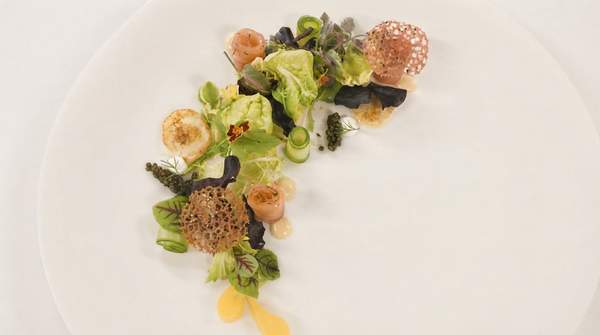
In a landmark moment, Plates restaurant earned a Michelin star in February, becoming the UK's first exclusively plant-based establishment to achieve such an honor. This signals a profound shift in fine dining's perception of plant-based cuisine.
Historically, fine dining was synonymous with meat and opulent ingredients. Now, plant-based establishments are not only earning the highest culinary accolades but also commanding premium prices, fundamentally re-evaluating luxury in high-end cuisine.
The culinary landscape is undeniably shifting. Innovative plant-based experiences are redefining gourmet excellence, poised to usher in more Michelin-starred plant-based restaurants and broader acceptance of plant-forward menus at the highest echelons.
The Ascent of Plant-Based Fine Dining
Plates restaurant secured its Michelin star in February, a remarkable feat given its official opening was in July 2024. This early recognition, following years as a Saturday pop-up at Trinity, reveals the Michelin Guide's proactive embrace of plant-based potential and the cuisine's journey from niche concept to mainstream acclaim. (Foodinspiration, Womeninthefoodindustry)
The Premium Price of Plant-Based Luxury
- £108 — The price for Plates restaurant's 6-course tasting menu, while a 5-course lunch option costs £90, according to Foodinspiration.
- £70 — The cost for the wine pairing at Plates restaurant, with 50/50 options at £60 and non-alcoholic pairings at £55, according to Foodinspiration.
- Three Michelin Stars — Eleven Madison Park holds this distinction, making it the only exclusively vegan restaurant globally to achieve such an honor, according to Gastromondiale.
Substantial price points, coupled with Eleven Madison Park's three-star distinction, firmly position plant-based cuisine as a premium segment in fine dining. It unequivocally sheds any lingering perception of it as a budget alternative.
Redefining Excellence: From Skepticism to Sustained Acclaim
| Metric | Initial Reception (Eleven Madison Park) | Current Status (Eleven Madison Park) |
|---|---|---|
| Menu Focus | Plant-based, criticized for imitating meat | Exclusively plant-based, maintained three Michelin stars |
| Chef's Label Preference | N/A | Haworth avoids 'vegan' label for dishes, according to Reuters |
| Diner Expectation | Ideology-driven | Taste-driven, not ideology |
Attribution: Gastromondiale, Reuters
Eleven Madison Park's journey, from initial criticism to retaining its three Michelin stars, alongside chefs like Haworth deliberately sidestepping the 'vegan' label, is a potent shift. Plant-based culinary excellence now thrives on taste, transcending ideological boundaries.
Winners and Losers in Culinary Innovation
Innovative plant-based chefs and restaurants are clear winners. They captivate discerning diners with ethical, high-end experiences that prioritize taste, proving a robust market for culinary novelty.
Conversely, traditionalists equating luxury solely with meat-centric menus face a reckoning. The 'vegan' label itself may fade, replaced by 'plant-based' as the preferred descriptor for high-end experiences, emphasizing artistry over dietary constraint.
Expert Outlook on Plant-Based Fine Dining
The initial negative reception for Eleven Madison Park's plant-based menu, specifically its attempts to imitate meat, suggests that the future of high-end plant-based cuisine lies in forging a distinct identity rooted in innovative plant ingredients rather than mere substitution.
- Many early reviews of EMP's plant-based menu were negative, criticizing the food for imitating meat, according to Gastromondiale.
- EMP has maintained its three Michelin stars with its plant-based menu, according to Gastromondiale.
True culinary success for plant-based fine dining demands transcending the 'vegan' label, focusing purely on taste and innovation. Restaurants championing unique plant flavors, rather than mimicking animal products, secure sustained acclaim and acceptance.
Despite the perception of plant-based as a niche, Plates' £108 tasting menu and £70 wine pairing demonstrate that consumers are willing to pay premium prices for exceptional plant-based experiences, signaling a lucrative market for culinary innovation that transcends traditional ingredient definitions.
- Plates restaurant offers a 5- or 6-course menu for £90 (lunch only) or £108, according to Foodinspiration.
- Accompanying drinks at Plates restaurant are priced at £70 for wine, £60 for 50/50, and £55 for non-alcoholic options, according to Foodinspiration.
The price points confirm fine dining's perceived value now extends beyond costly animal proteins. Culinary artistry, ethical sourcing, and unique experiences increasingly drive consumer willingness to pay, unlocking significant opportunities for plant-based establishments.
The explicit decision by Plates' chef Haworth to avoid the 'vegan' label is a critical shift: for plant-based fine dining to truly ascend, it must be judged on taste and culinary merit alone, not as an ideological statement or a dietary restriction.
- Haworth avoids the 'vegan' label for his restaurant's dishes, according to Reuters.
- Haworth wants diners to judge dishes on taste, not ideology, according to Reuters.
Strategic positioning enables plant-based cuisine to compete directly with traditional fine dining, captivating a broader audience who prioritize gourmet quality and innovative flavors over dietary adherence.
The continued ascent of plant-based fine dining, marked by Michelin recognition and premium pricing, appears poised to fundamentally reshape gourmet expectations, likely inspiring a new wave of culinary innovation rooted in the earth's bounty.