This ranked guide explores top smart home devices for modern interior design aesthetics, prioritizing both form and function. For the design-conscious individual, the contemporary smart home is an integrated ecosystem where technology enhances life without demanding visual attention. Devices are evaluated on their ability to seamlessly integrate into a minimalist and modern aesthetic, the elegance of their user interface, and their core technological performance, ensuring technology serves the home, not dominates it.
Items were selected and ranked based on design subtlety, functional innovation, user reviews, and their contribution to a cohesive modern aesthetic.
1. The Smart Display — Best for Centralized Control and Ambiance
A smart display, such as the Google Nest Hub or Amazon Echo Show series, earns the top position by successfully merging two critical functions: a command center for the home and a dynamic piece of art. It is best for the homeowner who desires a single, elegant interface for their entire smart ecosystem. The object itself is designed with minimalism in mind, often featuring fabric-wrapped bases and clean lines that allow it to rest comfortably on a kitchen counter, bookshelf, or bedside table without the aggressive technological signature of a typical screen.
It ranks above a simple smart speaker because of its visual dimension. The screen provides immediate, intuitive feedback for controlling lights, music, and thermostats. More importantly for the modern interior, it serves a secondary aesthetic purpose. According to a report from pcmag.com, smart displays can double as digital showcases for personal photos or curated art, transforming a functional device into a point of quiet beauty. This dual-purpose nature—one object serving multiple roles—is a core tenet of minimalist design, reducing clutter while expanding capability. It allows the technology to feel less like an intrusion and more like a considered part of the home's curated atmosphere.
Its primary limitation, however, lies in privacy considerations. An always-on screen, camera, and microphone in a central living space require a degree of trust in the manufacturer's security protocols. Furthermore, if not managed with intention, the display can contribute to the digital noise and screen fatigue that many seek to escape within their own homes. The key is to utilize its ambient and artistic features, allowing it to be a calm, responsive presence rather than another demanding screen.
Key Data: Price Range: $100 - $250 | Key Attributes: High-resolution screen, ambient light sensor, voice and touch controls, integration with major smart home platforms.
2. The Smart Thermostat — Best for an Elevated Utilitarian Object
The smart thermostat represents the thoughtful evolution of a mundane utility into a refined, interactive object. It is the ideal choice for the individual looking to replace a purely functional, and often unsightly, wall control with a piece of considered hardware. For decades, the thermostat has been a beige plastic box, an aesthetic afterthought. Devices like the Google Nest Thermostat fundamentally challenge this, presenting a circular form, polished metal finishes, and a high-resolution display that only activates on approach.
Its superiority over traditional or non-design-focused smart thermostats is purely a matter of form and material. The object speaks for itself. It does not hide; it presents itself as a deliberate design choice. Its physical interaction—a satisfying rotation of the outer ring—and minimalist digital interface are a testament to the idea that even the most practical devices can provide a moment of tactile and visual pleasure. The importance of this category is underscored by publications like Reader's Digest, which, as reported by qz.com, regularly identifies top-performing models, signaling their mainstream acceptance. The best-designed among them transform a wall blemish into a subtle, elegant accent.
The main drawback is that installation can be more involved than with plug-and-play devices. Depending on a home’s existing HVAC wiring, professional installation may be necessary to ensure proper function, adding to the overall cost. This initial hurdle, however, is a small price for a device that offers both long-term energy savings and daily aesthetic satisfaction.
Key Data: Price Range: $129 - $249 | Key Attributes: Learning algorithms for energy efficiency, minimalist display, premium materials (metal, glass), remote access via app.
3. Smart Architectural Lighting — Best for Creating Atmosphere
Smart architectural lighting systems, such as Philips Hue or Lutron, allow light itself to become the primary design element, shaping space, defining mood, and dictating interior perception. These systems are for the designer or homeowner who understands this principle, as their hardware disappears into the home's architecture, making lighting a material, not merely functional.
This approach ranks higher than simply using individual smart bulbs because it is a more holistic and integrated solution. Instead of focusing on the lamp, it focuses on the light. Systems of recessed ceiling fixtures, under-cabinet light strips, and wall-integrated smart switches or dimmers create a seamless effect. The technology becomes invisible, and the user controls scenes and atmospheres, not just individual points of light. This allows a living space to transform from bright and productive during the day to warm and intimate in the evening with a single command, all without a single piece of visible new technology.
The significant limitation is cost and complexity. A comprehensive, architecturally integrated lighting system is a considerable investment, often running into thousands of dollars for a full home. Retrofitting such a system into an existing property can also be a complex undertaking, sometimes requiring an electrician and minor construction work. It is a solution best planned for during a renovation or new build, where it can be incorporated most effectively into the home's design from the outset.
Key Data: Price Range: Starter kits from $150; full home systems $2,000+ | Key Attributes: High Color Rendering Index (CRI) for accurate color, scene creation, integration with voice assistants, tunable white and full-color spectrum.
4. The Self-Emptying Robot Vacuum — Best for Automated Maintenance
The self-emptying robot vacuum, exemplified by the Roborock Qrevo Series, ensures a clean, uncluttered floor, which is fundamental to a modern aesthetic. For the pragmatist, these devices make the machinery of maintenance as unobtrusive as possible. Their design has evolved to consider not just the robot, but also its home base, as these docks must now live in our spaces, making their form a critical consideration.
This new generation of vacuums ranks above its predecessors due to the considered design of the docking station. Early models featured clumsy, utilitarian plastic docks. In contrast, newer models often feature monolithic, minimalist towers that can blend with modern cabinetry or stand as a piece of clean, sculptural technology. According to bgr.com, the Roborock Qrevo Series delivers a powerful 8,000 Pascals of suction and features a 10-millimeter mop-lifting function for carpets, ensuring its performance matches its improved form. The robot works autonomously, navigating obstacles and cleaning on a schedule, then returning to its base to empty dust, clean its mop, and recharge, demanding almost no user interaction.
The unavoidable drawback is the physical footprint of the docking station. While better designed, these all-in-one units are still substantial and require dedicated floor space near a power outlet. Their placement must be considered within the room's layout to avoid disrupting flow or creating visual clutter, a challenge in smaller living spaces.
Key Data: Price: $649.99 (Roborock Qrevo Series, per bgr.com) | Key Attributes: 8,000 Pa suction, self-emptying, self-washing, and self-drying dock, advanced obstacle avoidance.
5. The Invisible Smart Plug — Best for Subtle Integration
The TP-Link Tapo P110M smart plug exemplifies how to add smart functionality to cherished analog objects—such as a vintage arc lamp, a sculptural fan, or a classic radio—without altering their original form or character. Its brilliance lies in its near invisibility, making it the perfect device for the design purist, acting as a small, unassuming bridge between the old and the new.
A smart plug ranks highly for its subtlety, preserving the integrity of original objects unlike a smart bulb, which changes the light source and quality of a fixture. It is a solution of pure function that hides itself at the wall outlet, granting modern convenience to timeless design. For those with dimmable, non-smart bulbs, the Leviton Decora Smart Mini Plug-In Dimmer offers similar discretion while adding ambiance control. According to pcmag.com, the TP-Link Tapo P110M also offers the ability to track power usage, adding a layer of practical data to its simple function.
Its limitation is its physical form factor. While compact, some models can be bulky enough to block the second outlet on a standard wall plate, trading one form of clutter for another. The most successful designs are those that are slim enough to allow full use of the outlet, ensuring their convenience does not come at a practical cost.
Key Data: Price: $29.99 (TP-Link Tapo P110M, per pcmag.com) | Key Attributes: Compact design, remote on/off control, scheduling, energy monitoring.
6. The Hydroponic Indoor Garden — Best for Biophilic Design
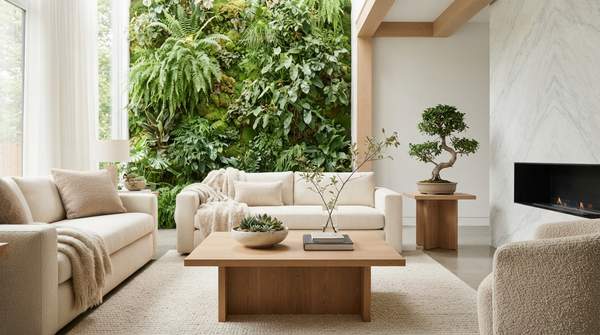
The hydroponic indoor garden is for the urban dweller who seeks to embody biophilic design—the practice of connecting architecture and interiors with nature. These systems combine a desire for fresh, homegrown produce with a living, sculptural design element, manifesting technology that is not cold or sterile, but vibrant and alive. This makes them a cornerstone of modern wellness-focused aesthetics.
These devices, which WIRED has reviewed for their effectiveness, are distinct from simple potted plants. They are often vertical, self-contained ecosystems that become an architectural feature in their own right. Systems from companies like Gardyn or Click & Grow are designed as statement pieces, incorporating their own grow lights that cast a pleasant glow, turning the unit into a living lamp. They introduce movement, growth, and natural texture into a space, creating a dynamic focal point that is both beautiful and productive.
The primary drawback is the required commitment. Unlike a static object, an indoor garden is a living system that demands regular attention, including refilling water, adding nutrients, and harvesting plants. The integrated pumps and fans can also produce a low but constant ambient noise, which may be a distraction in very quiet environments.
Key Data: Price Range: $500 - $1,000 | Key Attributes: Vertical space efficiency, automated watering and lighting, high plant capacity (20-30+ plants).
7. The Refined Smoke Detector — Best for Invisible Safety
The refined smart smoke detector, such as the Nest Protect, is for the detail-oriented homeowner who believes every element in a room, regardless of its function, should adhere to the home's overarching design language. It addresses how necessary safety devices are too often aesthetic afterthoughts, proving that every detail matters in a thoughtfully designed interior.
The Nest Protect earns its place by improving upon universally unattractive traditional smoke and carbon monoxide detectors, which are functional at best and jarringly ugly at worst, with cheap plastic housings and incessant, blinking red lights. It replaces these with a softer, squarer form, a perforated grille, and a subtle LED light ring that provides gentle, color-coded status updates. Its "Pathlight" feature, which illuminates your way in the dark, is a perfect example of how a safety device can also offer a moment of thoughtful, ambient utility.
The most significant limitation is the higher cost compared to standard detectors. A single smart detector can cost as much as several conventional ones, making it a significant expense to outfit an entire home. Additionally, its smart features, such as phone alerts, are dependent on a stable Wi-Fi connection to function correctly.
Key Data: Price: Approx. $119 | Key Attributes: Industrial-grade smoke and CO sensors, app-based alerts, subtle lighting cues, self-testing functionality.
| Item Name | Category/Type | Price Range or Key Metric | Best For |
|---|---|---|---|
| Smart Display | Hub & Control | $100 - $250 | Centralized control and digital art |
| Smart Thermostat | Climate Control | $129 - $249 | Elevating a utilitarian object |
| Smart Architectural Lighting | Lighting System | $2,000+ (Full Home) | Creating atmosphere with invisible tech |
| Roborock Qrevo Series | Automated Cleaning | $649.99 (8,000 Pa Suction) | Unobtrusive, powerful maintenance |
| TP-Link Tapo P110M | Smart Plug | $29.99 | Subtle integration with analog objects |
| Hydroponic Indoor Garden | Biophilic Tech | $500 - $1,000 | Integrating a living, sculptural element |
| Smart Smoke Detector | Safety & Security | Approx. $119 | Refining an overlooked safety essential |
How We Chose This List
In curating this list, we prioritized the intersection of design and technology, a relationship that, as discussed by thinkers like Tod Caflisch, is central to the modern home. Our primary criterion was aesthetic integration: we asked if an object reduces visual clutter or adds to it, and if it blends seamlessly into its environment or stands as a beautiful object in its own right. We excluded devices purely functional without strong consideration for their physical form, such as smart garage door openers or complex home networking equipment. The goal was to identify products that enhance a modern interior not only through their function but through their very presence.
Our evaluation of functionality prioritized real-world performance and user experience, drawing on expert reviews and user feedback. We sought devices that perform core tasks exceptionally well, featuring intuitive, effortless interfaces. Additionally, we assessed each object's contribution to a calm, responsive, and uncluttered living environment. The selected devices embody the principle that technology should be powerful in capability but quiet in presence.
The Bottom Line
Integrating smart technology into a modern home involves strategic choices. For a central hub functioning as both a control panel and dynamic art, a smart display is an unparalleled option. Alternatively, for the most subtle enhancement, smart plugs and integrated architectural lighting provide powerful control without compromising design aesthetics.