Thanks to roof-mounted solar panels and efficient design, one Southampton home pays CAD 0.00 annually for electricity, according to cmigroupinc. Thoughtful engineering can eliminate a significant household expense, offering homeowners complete energy independence. The CAD 0.00 annual electricity cost proves the tangible financial benefits of advanced design.
Many believe sustainable interior design is an expensive luxury, requiring specialized materials and complex installations. The perception that sustainable interior design is an expensive luxury often obscures its potential to eliminate utility bills and leverage readily available, cost-effective resources. The tension between perceived cost and actual long-term savings hinders wider adoption.
As awareness grows and material innovations continue, sustainable interior design is poised to become the standard rather than the exception. The shift towards sustainable interior design, driven by ecological necessity and economic advantage, fundamentally alters the long-term cost of living for homeowners.
Beyond Aesthetics: Defining Sustainable Interior Design
Sustainable interior design prioritizes environmental responsibility and human well-being through careful material selection and resource management. It integrates principles that reduce ecological impact while enhancing indoor environments. Sustainable interior design considers the entire lifecycle of components, moving beyond purely visual appeal.
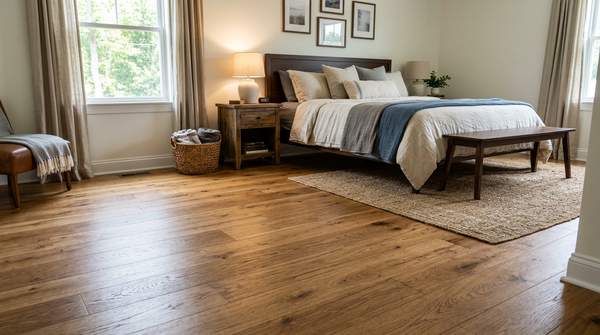
For instance, bamboo stands as a strong, durable, and rapidly renewable resource, suitable for various furniture and decor applications in interior design, according to rmcad. Similarly, reclaimed wood, sourced from old buildings, finds new life when repurposed into furniture and decorative items. Recycled glass, created from old jars and bottles, offers an ideal material for decor, countertops, and accent pieces, also noted by rmcad. These examples show the diverse, accessible, and aesthetically pleasing materials forming sustainable interior design's foundation.
The FP 10 House: A Blueprint for Zero-Cost Living
The FP 10 house in Southampton, USA, demonstrates how integrating specific design choices can achieve radical energy efficiency. The FP 10 house incorporates a wall of water bottles on its north side, functioning as a thermal mass to store heat, according to cmigroupinc. Passive design elements like this reduce reliance on active heating systems.