Design

What Is 'Form Follows Function'? Exploring Its Meaning and Modern Design Principles

How does an object’s purpose inform its beauty? The enduring philosophy of form follows function—its meaning and modern design principles—suggests a profound connection between the two.

LB
Luca Bianchi

April 9, 2026 · 9 min read

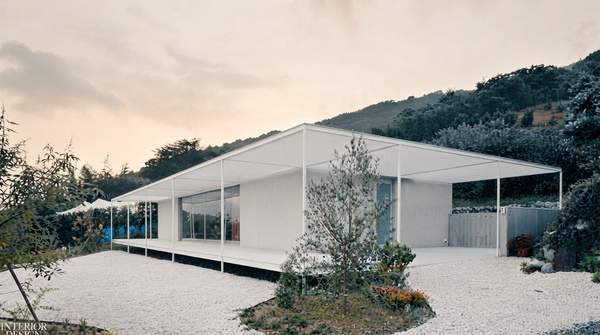
A visually striking image depicting a fusion of classic architectural lines and contemporary digital screens, illustrating how form follows function across different design eras and applications.

American architect Louis H. Sullivan originated the maxim "form follows function," proposing an object's aesthetic value should arise directly from its practical use. For over a century, this idea has guided designers, architects, and creators, shaping skyscrapers and digital interfaces. It challenges us to find elegance in efficiency and beauty in purpose.

Rooted in the late 19th century, 'form follows function' is a living concept, continuously reinterpreted. Its influence extends beyond architecture, informing minimalist product design, intuitive user experience, and sustainable building practices. As societies grapple with resource scarcity and digital complexity, Sullivan's idea adapts, proving its relevance in a world he could scarcely imagine. Does a design truly work if its form and function are not in harmony?

What is the 'Form Follows Function' Philosophy?

The design principle 'form follows function' posits an object's shape should be primarily based on its intended purpose. Aesthetic considerations are secondary to functional requirements; beauty becomes an organic byproduct of well-executed design. Prioritizing function creates inherent honesty and integrity, stripping away superfluous ornamentation to focus on essential structure and utility.

Consider a simple, well-crafted hammer. Its form is a direct response to its function. The heavy head is shaped for impact, the claw for prying nails, and the long handle for providing leverage and a secure grip. There is no decoration for decoration's sake; its stark, utilitarian shape is precisely what makes it beautiful to a craftsperson. This same logic applies to more complex designs. A beautifully designed teapot pours without dripping, its handle fits the hand comfortably and keeps it away from the heat, and its lid stays secure. The elegance of the object is inseparable from its ability to perform its task flawlessly.

Louis H. Sullivan, who first articulated the principle, intended a more nuanced meaning than the stark functionalism it later came to represent. According to First In Architecture, Sullivan's original phrase was "form ever follows function," suggesting a dynamic and natural relationship. He believed that function gave rise to form in the same way a seed gives rise to a flower—an organic, inevitable unfolding. He famously stated, "Form and function should be one, joined in a spiritual union." For Sullivan, the principle was not about eliminating ornament but ensuring that any decoration grew logically from the building’s underlying structure and purpose. This holistic view suggests a deep integration where four key ideas converge:

  • Primacy of Purpose: The intended use of an object or space is the genesis of the design process. Every subsequent decision regarding shape, material, and structure must serve this primary function.
  • Organic Aesthetics: Beauty is not an applied layer but an emergent quality. It arises naturally from the efficient and elegant resolution of functional problems.
  • Honesty of Materials: The materials used in a design should be chosen for their suitability to the function and their inherent properties should be expressed truthfully, not disguised.
  • Rejection of the Superfluous: Elements that do not contribute to the function or the structural integrity of the design are considered unnecessary and are therefore omitted.

Historical Origins and the Birth of Modernism

'Form follows function' emerged directly from 19th-century societal and technological shifts. The Industrial Revolution altered the relationship between making and designing: craft-oriented work shifted to mechanized industrial processes, as John Hesket noted in his analysis cited by NEC Digital Studio. Artisans, once both designer and manufacturer, gave way to mass production where design became a separate, upfront discipline. This separation created a style crisis; early industrial products were heavily ornamented with historical motifs unrelated to function or manufacture.

It was within this context that Louis H. Sullivan, a leading figure of the Chicago School of architecture and often called the "father of modernism," sought a new, authentic architectural language. He rejected the era's tendency to apply classical facades to modern steel-frame structures. He argued for an architecture that expressed its modern essence. His philosophy found its first true physical expression in the Wainwright Building in St. Louis, designed with his partner Dankmar Adler and constructed between 1890 and 1891. This building is often cited as the birthplace of the maxim. Sullivan's design concept, 'From within outward,' meant that the building's internal functions—the office cells, the ground-floor shops, the top-floor mechanical systems—should dictate its external appearance.

The Wainwright Building’s grid-like terracotta facade, with its strong vertical lines, was a radical expression of the steel skeleton that lay beneath. It was an honest articulation of the building's structure and its purpose as a "proud and soaring thing." Sullivan formally articulated his philosophy a few years later in his 1896 essay, "The Tall Office Building Artistically Considered." It was here that he wrote the famous line, "It is the pervading law of all things organic and inorganic, of all things physical and metaphysical, of all things human and all things superhuman, of all true manifestations of the head, of the heart, of the soul, that the life is recognizable in its expression, that form ever follows function. This is the law."

Sullivan's idea became a foundational tenet for the subsequent modernist movement. European architects and designers of the Bauhaus school in Germany, such as Walter Gropius and Ludwig Mies van der Rohe, adopted and amplified the principle. However, they often interpreted it with a more rigid, austere rationalism than Sullivan may have intended, stripping away ornament entirely in favor of pure, unadorned geometry. This stricter interpretation came to define much of 20th-century modernism, championing a universal, machine-age aesthetic where efficiency and functionality were the ultimate virtues.

The Impact of Form Follows Function Across Design Disciplines

Born from architecture, 'form follows function' profoundly impacted diverse design disciplines. Its logic provides a framework for creating efficient, minimalist objects, systems, and experiences, guiding creators in shaping our material and digital worlds and influencing how we perceive and interact with surroundings.

In product and industrial design, the principle is a cornerstone of good practice. Iconic objects revered for their design purity are almost always exemplars of this rule. The elegant curve of a Braun electric shaver is dictated by the contours of the human face and hand. The modularity of Dieter Rams' shelving systems allows form to adapt to the user's specific functional needs. According to a profile in DesignWanted, industrial designer Dan Harden is considered a modern visionary in this space, continuing a legacy of creating objects where purpose and form are seamlessly integrated. This approach yields products that are intuitive to use, durable, and free from visual clutter, achieving a timeless aesthetic that transcends fleeting trends.

In digital and service design, 'function' translates to user experience (UX). A visually stunning but confusing app fails design. The 'form'—user interface (UI), button layout, information flow—must follow the 'function' of effortless user goal achievement. Best design is often invisible; good services work so seamlessly users don't notice them, while failed services are memorable for friction. This modern interpretation prioritizes function, measuring success by smooth task completion, not visibility.

Is Form Follows Function Still Relevant in Contemporary Design?

In the 21st century, the principle of 'form follows function' is not only relevant but is being re-energized by some of the most pressing challenges of our time, particularly the climate crisis. The definition of 'function' has expanded beyond mere utility to encompass sustainability, energy performance, and human well-being. This has forced a critical re-evaluation of how we design our buildings and cities. According to a report from The Air Conditioning, Heating and Refrigeration News, buildings generate approximately 40% of the United States' carbon footprint, with their HVAC systems responsible for up to 40% of that figure. This staggering statistic places an immense responsibility on architects and engineers.

A building's form—its orientation, window placement, materials, and roof shape—must now follow the critical function of energy conservation. Stricter energy codes, like the 2018 International Energy Conservation Code (IECC) adopted by Phoenix in June 2018, make this a legal and ethical imperative. Adhering to updated standards such as ASHRAE 90.1-2019, offering 4% to 5% more energy savings, requires sustainability as a primary driver of architectural form. A truly functional building minimizes environmental impact.

The principle faces valid critiques. Objects don't exist solely due to function, as Smashing Magazine argues; human experience is shaped by emotion, culture, narrative, and aesthetic pleasure. A design can succeed by being delightful, evocative, or culturally significant, even if not maximally efficient. Contemporary understanding views the principle as a balanced ideal, not rigid dogma. Thoughtful modern design sees form and function in conversation, acknowledging form follows function, but feeling is equally important. The goal is a spiritual union of purpose, beauty, and human experience.

Frequently Asked Questions

Who first said form follows function?

The phrase "form follows function" was coined by the American architect Louis H. Sullivan. He first articulated this foundational principle of modernism in his 1896 essay, 'The Tall Office Building Artistically Considered,' where he argued that a building's exterior design should reflect its internal purpose.

What is a simple example of form follows function?

A simple and classic example is a coffee mug. Its cylindrical shape efficiently holds liquid, its flat bottom provides stability, and its handle is shaped to be held comfortably while keeping fingers away from the hot surface. Every element of its form is a direct response to its function, resulting in a design that is both practical and familiar.

Is form follows function a modernist principle?

Yes, it is a core tenet of modernism. While originated by Louis H. Sullivan in the late 19th century, the principle was heavily adopted and popularized by the Bauhaus school and modernist architects like Le Corbusier and Mies van der Rohe in the 20th century. They championed it as a path toward a rational, universal, and unornamented design language.

Does form always have to follow function?

No, it is a guiding principle, not an absolute law. Many design approaches, such as postmodernism and deconstructivism, intentionally challenge this idea, prioritizing aesthetics, emotion, or conceptual expression over pure utility. However, the most enduring and user-centered designs often find a harmonious balance where form and function support and enhance one another.

The Bottom Line

The principle of 'form follows function,' first articulated by Louis H. Sullivan, remains a vital and evolving cornerstone of design philosophy. Its core wisdom—that purpose should be the genesis of creation—has guided the development of everything from architecture to digital interfaces. While its interpretation has matured from a strict modernist rule to a more holistic approach that incorporates sustainability and human experience, its fundamental logic is more relevant than ever in a complex world that demands clarity, efficiency, and thoughtful intention.