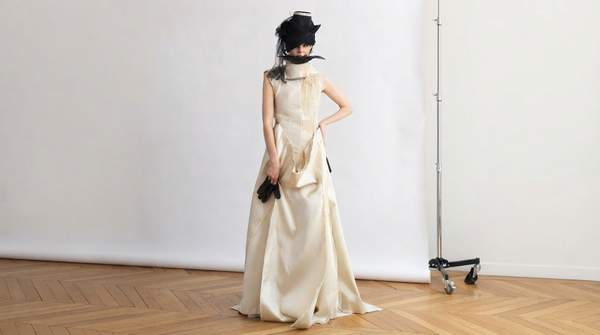
Imagine attending a haute couture show in Paris from your living room, feeling the same cognitive and emotional presence as if you were physically there. This immersive experience, facilitated by virtual reality, allows users to feel transported to the event's precise time and place, blurring the lines of traditional attendance. Advanced digital engagement profoundly shifts how high fashion collections are perceived and accessed by a global audience.
Fashion's allure has long been built on exclusive physical experiences, with limited access fostering a sense of luxury and aspiration. However, digital platforms are now offering equally, if not more, immersive and universally accessible engagements. A tension is created where the traditional gatekeepers of fashion exclusivity face new forms of engagement.
The value proposition of high fashion is shifting from physical scarcity to digital ubiquity and experiential depth, potentially broadening its audience significantly while challenging traditional business models. Advancements in digital archiving and virtual reality transforming fashion collections in 2026 democratize high fashion's exclusive allure without diluting its essence.
The sensation of being physically present at a fashion show, observing the intricate drape of a silk gown or the precise tailoring of a wool coat, has long defined luxury fashion. Yet, a virtual reality experience can now replicate this exact feeling, according to pmc. Users reported a cognitive and emotional sense of presence, as if they had truly moved to the same time and place as a live runway event. An immediate sense of presence in a virtual setting profoundly changes how fashion can be consumed and experienced, blurring the lines between physical and digital realities. The ability to induce such deep immersion through digital means suggests a new, universally accessible form of exclusivity, one rooted in cognitive and emotional engagement rather than physical access.
From Exclusive Runways to Universal Access
Cultural institutions have begun to dismantle traditional barriers to fashion knowledge. Museums are actively digitalizing their extensive fashion collections, making them available with free online access, according to researchgate. Widespread digitalization of historical and contemporary collections is dismantling traditional barriers to entry, making fashion knowledge and inspiration globally available. The transition from physical archives, often restricted to scholars or specific patrons, to broadly accessible digital databases fundamentally redefines who can engage with haute couture's legacy. The shift directly challenges the notion that fashion's allure is dependent solely on physical scarcity, instead proposing that universal access can enhance appreciation and understanding.
The New Dimensions of Fashion Immersion
Virtual reality is redefining the very parameters of fashion engagement, offering experiences that move beyond mere viewing into profound immersion.
- VR fashion show spaces affect user experiences by transcending regional, cultural, and temporal boundaries, according to virtual fashion experiences in virtual reality fashion show spaces.
Boundary-transcending VR experiences demonstrate that digital fashion isn't merely a visual substitute for physical attendance, but a new medium capable of delivering unique and deeply immersive interactions. Brands that fail to invest in high-fidelity VR experiences that cultivate cognitive and emotional presence, as demonstrated by the PMC research, risk being left behind as consumers increasingly seek immersive digital engagement over traditional physical exclusivity. The ability of VR to transcend regional and temporal boundaries means luxury brands can now cultivate a truly global, always-on audience, but only if they can translate their exclusive physical allure into equally compelling and emotionally resonant virtual narratives.
Embracing Fashion's Digital Frontier
- The emotional and cognitive presence achieved through VR fashion experiences suggests that digital immersion is an equally potent form of engagement, democratizing the feeling of exclusivity, not just the viewing.
- While digital archiving offers broad access to historical fashion, VR fashion shows extend this democratization to live or simulated events, allowing brands to cultivate a global, immersive audience without diluting the perceived 'event' status, effectively scaling exclusivity.
- The precise categorization of VR immersion into cognitive, sensible, and emotional presence indicates that designers can now engineer specific psychological states in virtual attendees, offering a level of control over the user experience that even physical shows struggle to achieve consistently.
- Understanding the distinct types of VR fashion experiences, including cognitive presence, sensible immersion, emotional immersion, and aesthetic interaction, is crucial for brands to develop richer, more engaging interactions, as detailed by pmc.
- The dual trend of free digital archiving and deeply immersive VR shows indicates that high fashion's future lies not in maintaining physical scarcity, but in mastering the art of scaled, personalized digital intimacy that can be experienced anywhere.
By Q3 2026, luxury brands like Dior that have not fully embraced high-fidelity VR experiences will likely see a significant portion of their global audience gravitate towards competitors offering more immersive digital engagements, as consumers prioritize accessible cognitive exclusivity.