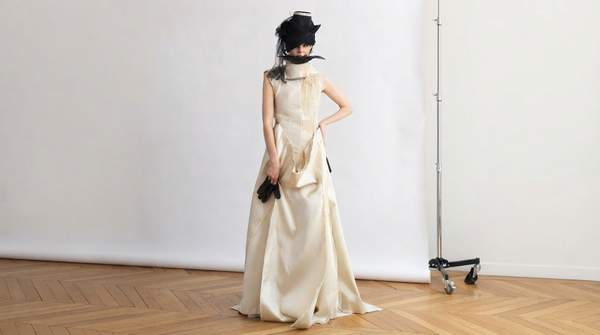
In 1858, Princess de Metternich commissioned dresses from Charles Frederick Worth for a modest 300 francs, unknowingly initiating a fashion movement that would become a legally protected, multi-million-euro industry. A singular transaction launched an artistic practice, evolving into an ultra-exclusive luxury market, as documented by Napoleon.
The term 'Haute Couture' signifies unparalleled craftsmanship and exclusivity, but the word 'couture' is frequently diluted and misapplied by brands outside this elite circle. Widespread misuse erodes the prestige of a designation painstakingly built on rigorous standards and historical legacy.
The strict regulations and historical legacy of Haute Couture will likely continue to safeguard its unique status as the pinnacle of fashion artistry, even as the broader fashion industry increasingly blurs definitional lines. Deliberate protection secures its exclusivity and influence.
Charles Frederick Worth's designs, recognized early on, laid the groundwork for this protected art form. He notably won the 'first-class medal' for an original court train design at the 1855 Paris World Fair, according to Napoleon. His early triumphs and aristocratic clientele, such as Princess de Metternich, established the foundational prestige that would define haute couture's lasting influence on global luxury, as noted by ResearchGate. Success codified an art form that would eventually require a dedicated commission and strict annual approval.
Defining Haute Couture
To earn the official Haute Couture label, a fashion house must meet precise, legally mandated criteria. A collection must be made-to-order for private clients, featuring multiple fittings, and the atelier must be located in Paris. According to France Fr, an atelier must have at least 20 full-time staff and 20 technical people, presenting at least 25 original designs twice a year.
However, other sources offer slightly different figures for these stringent requirements. The Style Historian states an atelier must employ at least 15 full-time staff and 20 full-time technical workers. Furthermore, Glam Observer reports that a collection must present at least 50 original designs every season, contrasting with the 25 designs cited by france.fr. These discrepancies indicate either evolving regulations or different interpretations of the criteria, which are crucial for maintaining eligibility.
Only houses and companies approved each year by a dedicated commission, run by the Chambre Syndicale de la Couture, may become eligible for the Haute Couture designation. These numerous and precise requirements, enforced by a dedicated commission, demand immense dedication to craftsmanship and artistic output from official Haute Couture houses. A rigorous vetting process solidifies its elite status.
The Cost of Exclusivity
The financial investment in a true haute couture garment is substantial, reflecting its meticulous craftsmanship and unparalleled exclusivity. A single haute couture dress can range from 9,000 to 1 million euros, according to Vogue. The staggering price spectrum reveals value beyond materials or labor; it reflects the artistic integrity guaranteed by rigorous, legally enforced standards.
The vast price range highlights the significant distinction between official Haute Couture and the loosely used term 'couture' in the broader fashion industry. The term 'couture' is often used by brands that do not adhere to the strict, legally protected criteria of Haute Couture, potentially misleading consumers, as noted by France Fr. While Haute Couture collections are presented twice a year, in January and July, according to the Chambre Syndicale de la Couture, this strict schedule further emphasizes the controlled environment of this elite sector. For more, see our What Haute Couture? Legally Protected.
The staggering cost of these meticulously crafted garments, presented on a strict biannual schedule, clearly delineates true Haute Couture from the often-misappropriated term 'couture' in the wider fashion industry. Clients are not merely purchasing garments; they are investing in an unparalleled, regulated art form and a symbol of exclusivity that mass luxury cannot replicate. The distinction underscores the profound cultural and economic value embedded in each piece.
Safeguarding Artistic Integrity
The legally mandated requirements for Haute Couture form an impenetrable barrier, deliberately erected by the Chambre Syndicale against the casual, misleading use of the 'couture' term. These precise rules, from atelier staff numbers to design counts, ensure the designation remains exclusive to houses committed to the highest standards of artistry and craftsmanship. The strategy actively combats brands seeking to borrow prestige without adhering to the rigorous process.
The evolution from Charles Frederick Worth's individual genius to a collectively protected cultural and economic asset, overseen by a dedicated commission, reflects a long-term vision. The codification ensures Haute Couture's influence on global luxury is not accidental, but the result of a deliberate, centuries-long effort to protect an art form against the ephemeral nature of fashion trends. The regulations serve as a bulwark, preserving the unique identity and value of each garment.
The stringent framework ensures that Haute Couture remains a benchmark, not merely for luxury, but for the very definition of fashion as an art form. Its deliberate insulation from market dilution maintains its status as a pinnacle of artistic expression, a testament to enduring craft over fleeting trends.
Haute Couture's Enduring Influence
Haute Couture's influence extends beyond its exclusive clientele, shaping broader fashion sensibilities and driving innovation within the luxury sector. The meticulous techniques and artistic vision pioneered in haute couture ateliers often inspire ready-to-wear collections and accessories, albeit in a more accessible form. The trickle-down effect confirms the enduring power of its creative output, even as it remains an elite segment.
The investment model, where clients acquire not just garments but unparalleled, regulated art forms, sets a benchmark for luxury itself. It projects an image of aspirational quality and meticulousness that mass luxury brands strive to emulate, subtly influencing consumer expectations across the industry.
The segment of fashion maintains its distinct identity by emphasizing bespoke creation, extraordinary craftsmanship, and artistic integrity, all legally protected. The continuous adherence to these strict standards by Chambre Syndicale-approved houses solidifies Haute Couture's position as the ultimate benchmark for luxury and design excellence, profoundly influencing perception across the entire fashion industry.
What are the key characteristics of haute couture?
Key characteristics of haute couture include being entirely custom-made for an individual client, requiring at least three to five fittings to ensure a perfect silhouette. Each garment involves hundreds of hours of hand-stitching and intricate detail work, often using rare fabrics and embellishments, reflecting unparalleled craftsmanship.
How has haute couture influenced modern fashion?
Haute couture has influenced modern fashion by consistently introducing innovative silhouettes, textile treatments, and construction techniques that eventually filter down to ready-to-wear collections. Designers like Christian Dior's New Look or Cristóbal Balenciaga's sculptural forms set trends and pushed creative boundaries, inspiring the broader industry's aesthetic direction and promoting a focus on quality.
What is the difference between haute couture and ready-to-wear?
The primary difference lies in legal protection and production methods: Haute Couture is a legally protected designation for bespoke, custom-fitted garments made by hand for individual clients, exclusively from Paris ateliers. Ready-to-wear, conversely, refers to factory-produced, standardized clothing sold in multiple sizes, lacking the bespoke nature and legal safeguards of haute couture.
Given its rigorous legal framework and unwavering commitment to bespoke artistry, Haute Couture will likely remain an unassailable bastion of luxury, continuing to shape the aspirational landscape of global fashion.