The renovation of Rhoades Hall reused 97% of its existing exterior walls, floors, and roofs, demonstrating that deep sustainability often means working with what's already there. A 46.8% reduction in annual energy consumption directly resulted from this strategic approach, according to Clark Nexsen. Such commitment challenges the perception that 'green' design primarily involves new, cutting-edge materials, instead highlighting the power of thoughtful adaptation.
Many view sustainable interior design as an expensive add-on, a luxury reserved for niche projects. However, evidence shows it functions as a practical specification discipline that yields significant long-term savings and environmental benefits. The principles of sustainable interior design demonstrate a financially prudent path, enhancing energy efficiency and asset value.
As awareness grows and technologies advance, sustainable interior design will become the default standard, not an optional upgrade, driving a fundamental shift in how spaces are conceived and built. This transition prioritizes longevity and efficiency, embedding true environmental stewardship into every design decision.
Beyond Aesthetics: Defining Sustainable Interior Design
Sustainable interior design functions as a specification discipline rather than mere branding, according to Auramodernhome. It emphasizes choosing materials and components for their lifespan and repairability. Specifying for lifespan involves selecting durable joinery, repairable upholstery, and simpler assemblies, prioritizing enduring quality over trendy, low-cost pieces that quickly become waste.
Interior designers also increasingly integrate advanced technologies into their projects, according to the American Society of Interior Designers (ASID). These include LED lighting, smart thermostats, and energy-efficient appliances that offer immediate efficiency gains. However, true long-term sustainability requires a foundational commitment to material longevity and repairability. Over-reliance on technology risks not addressing fundamental material choices.

Auramodernhome's emphasis on specifying for lifespan and durability, alongside ASID's mention of integrating advanced technologies, confirms that true sustainable design demands a dual strategy. Investing in both long-lasting, repairable materials and cutting-edge energy management systems achieves comprehensive, future-proof efficiency and asset value. Focusing on both ensures spaces are not only energy-efficient today but also robust and adaptable for decades, minimizing environmental impact.
Real-World Impact: Case Studies in Eco-Conscious Spaces
The Juniper Networks campus achieved LEED Platinum certification for its buildings, according to RMW Architecture & Interiors. This rigorous standard ensures every aspect of the campus, from material selection to energy systems, meets strict environmental performance criteria. This certification proves that large corporate entities can integrate complex sustainable principles, setting a high bar for environmental responsibility.
The projected 1,010,792 kWh savings in the first year at Juniper Networks proves sustainable interior design is not merely an environmental gesture, but a direct driver of significant operational cost reductions. The substantial energy reduction, coupled with the 46.8% energy reduction at Rhoades Hall, confirms the financial prudence inherent in sustainable design choices. The projects illustrate how comprehensive sustainable principles are applied in diverse real-world contexts, from large commercial campuses to institutional renovations.
Holistic Benefits: Beyond Environmental Savings
On-site alternative energy systems provide approximately 1.4MW of Juniper Networks' power, according to RMW Architecture & Interiors. The provision of 1.4MW of power marks a significant step towards energy independence. The integration of renewable energy sources reduces reliance on external grids and mitigates operational costs. They contribute to a building's overall resilience, ensuring a stable and sustainable power supply.
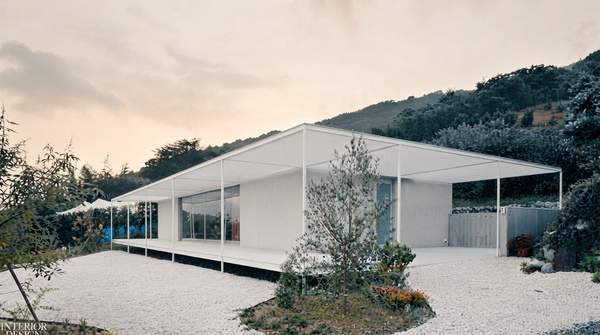
Gradients of Green, a LEED-Platinum certified single-family home, illustrates the scalability of sustainable design principles. The residential project shows that advanced environmental standards are not exclusive to large commercial endeavors but are fully applicable to individual dwellings. Beyond reducing ecological footprints, sustainable design actively enhances the health, comfort, and energy independence of occupants and buildings, creating healthier living environments.
Based on the Rhoades Hall renovation reusing 97% of existing structures and achieving a 46.8% energy reduction, companies prioritizing new builds over deep renovations overlook the most impactful and cost-effective path to sustainability. The approach trades tangible savings for perceived novelty, missing opportunities for significant long-term asset value. The universal application of rigorous certification standards, like LEED Platinum, across both corporate campuses and single-family homes, confirms their wide applicability.
What are the key elements of sustainable interior design?
Key elements include prioritizing material longevity, selecting durable and repairable components, and integrating advanced energy-efficient technologies. For instance, designing with the WELL Building Standard in mind, as seen in the Gradients of Green home, focuses on occupant health and well-being through optimized air quality, lighting, and access to natural elements.
How can I make my home more eco-friendly with design?
Incorporating eco-friendly design into a home involves several strategies, such as utilizing drought-tolerant landscaping to reduce potable water use by more than 50%. Features like a vegetated wall, exemplified by the 2,300 square feet on Juniper's Garage One, can also improve air quality and reduce urban heat island effects. Specific design choices enhance environmental performance directly.
What are the benefits of sustainable interior design?
Sustainable interior design offers substantial benefits beyond environmental stewardship, including significant financial savings through reduced energy consumption and enhanced asset value. Projects like Juniper Networks, which projected over 1 million kWh in first-year energy savings, demonstrate direct operational cost reductions. Additionally, improved indoor air quality and natural light contribute to occupant health and productivity.
If current trends continue, sustainable interior design will likely transition from an optional feature to a core industry expectation by 2026, driven by proven financial returns and a growing market demand for resilient, efficient spaces.