What Are Modern Food Pairing Principles and Flavor Profiles?

At a specialized lab, gas chromatography coupled with mass spectrometry dissects ingredients to reveal their hidden aromatic profiles, guiding chefs to create pairings previously unimaginable.

CR
Camille Rousseau

April 26, 2026 · 5 min read

Chefs in a modern laboratory using advanced technology to analyze food ingredients and discover new flavor profiles for innovative pairings.

At a specialized lab, gas chromatography coupled with mass spectrometry dissects ingredients to reveal their hidden aromatic profiles, guiding chefs to create pairings previously unimaginable. The precise scientific method transforms raw produce, spices, and proteins into a symphony of molecular data, offering a blueprint for flavor combinations that extend far beyond traditional culinary understanding. Such detailed analysis allows for the systematic engineering of taste, promising novel experiences for adventurous diners.

While culinary traditions have long dictated food pairings based on cultural experience, scientific analysis now reveals that unexpected ingredients share fundamental flavor compounds, leading to surprising new combinations. A tension exists between generations of intuitive cooking and a new era of data-driven gastronomic exploration.

The future of gastronomy will increasingly blend artistic intuition with data-driven chemical insights, pushing the boundaries of taste and creating entirely new culinary experiences. The shift, driven by advances in modern food pairing principles and flavor profiles, promises to redefine how kitchens operate globally in 2026 and beyond.

Foodpairing, for instance, utilizes gas chromatography coupled with mass spectrometry (GC-MS) to map the intricate aromatic profile of ingredients. The method breaks down an ingredient into its constituent volatile compounds, providing a detailed chemical fingerprint. Scientific scrutiny demystifies the art of cooking, transforming recipe development into a more predictable process. It allows chefs and food scientists to identify shared aromatic compounds between seemingly disparate ingredients, shifting focus from subjective taste to objective chemical commonalities. A systematic approach to taste engineering opens new avenues for gastronomic innovation, democratizing access to advanced culinary techniques.

The Science of Shared Scents

The fundamental principle underpinning modern food pairing is that ingredients sharing flavor compounds are more likely to taste well together, according to Nature. The principle explains beloved culinary combinations like tomatoes and mozzarella, which possess overlapping aromatic molecules. Interestingly, Nature also reports that Western cuisines tend to use ingredient pairs that share flavor compounds. This finding suggests what was long considered intuitive culinary art has an unconscious, underlying scientific basis, with chefs tapping into chemical commonalities without explicit knowledge.
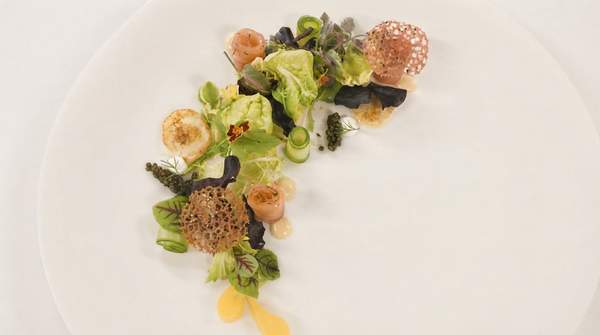
However, while tradition implicitly leveraged these principles, explicit scientific identification now allows for systematic exploration beyond culturally-bound discoveries. Scientific tools can push culinary boundaries in ways traditional intuition might not. The deliberate analysis of flavor compounds, rather than mere empirical observation, allows for the creation of 'unnatural' yet delicious pairings. The deliberate analysis challenges long-held culinary norms, moving gastronomic breakthroughs toward data-driven insights, rather than solely daring palates.

Mapping the Flavor Universe with AI

Advanced computational methods systematically map and predict flavor relationships. Nature describes Metapath2vec, a graph embedding method, which incorporates an additional chemical learning layer to construct embedded representations of food. These food representations, generated by systems like FlavorGraph, directly suggest novel combinations, according to Nature. The AI-driven approach actively predicts previously unimagined pairings by identifying subtle, non-obvious chemical links between ingredients, pushing culinary boundaries far beyond human intuition and historical precedent.

Furthermore, modules within the broader flavor network correspond to distinct food classes, such as meats or fruits, as detailed by Nature. The structural organization within the flavor universe allows for a more granular understanding of ingredient relationships. By explicitly mapping aromatic profiles via GC-MS and integrating AI-driven prediction, chefs can bypass cultural biases. They can systematically create unexpected yet delicious combinations, transforming recipe development from an iterative art into a data-driven science. The comprehensive, interconnected map of flavor enables unprecedented discovery and prediction of new pairings, accelerating gastronomic innovation. For more, see our Food Pairing Hypothesis: Understanding Its.

Beyond Pairing: Enhancing and Correcting Flavors

The scientific understanding of flavor compounds extends beyond merely creating new pairings; it also offers solutions for enhancing and correcting existing food and drink. For instance, chemists devised a novel method using synthetic polymers to reduce the unpleasant smoky flavor and aroma of wines made from wildfire-exposed grapes, according to Axial. The targeted intervention addresses a specific culinary challenge, preserving the quality of a product that might otherwise be deemed unsaleable and mitigating environmental impacts on food production.

Moreover, specific compounds can significantly improve the sensory characteristics of beverages. Kokumi peptides, for example, provide sparkling wine with desired characteristics, including its smoothness and rich flavor profile, as reported by Axial. Identifying and understanding these peptides allows producers to optimize fermentation processes or even introduce these compounds to enhance the quality of their products at a molecular level.

Even the perception of spiciness can be scientifically managed. Chemists recently identified compounds in chili peppers that lessen their perceived intensity, according to Axial. The discovery holds implications for adjusting heat levels in food products, catering to diverse palates without altering the fundamental ingredient. The scientific understanding allows for targeted interventions, offering precise control over sensory attributes and transforming culinary challenges into solvable scientific problems.

The Culinary Revolution on Your Plate

The explicit scientific mapping of flavor compounds, as demonstrated by Foodpairing's GC-MS techniques and Nature's FlavorGraph, liberates chefs from intuition and tradition. The systematic engineering of taste democratizes high-level culinary innovation, creating entirely new food categories. Unexpected pairings, like chocolate and cauliflower, now challenge preconceived notions, expanding our palate and redefining delicious.

The shift from intuition to data-driven discovery fundamentally reshapes cooking, fostering continuous experimentation. It promises an exciting, diverse future for global gastronomy, making sophisticated flavor science a cornerstone of modern culinary practice.

Common Questions About Flavor Science

What are some modern examples of scientifically-derived food pairings?

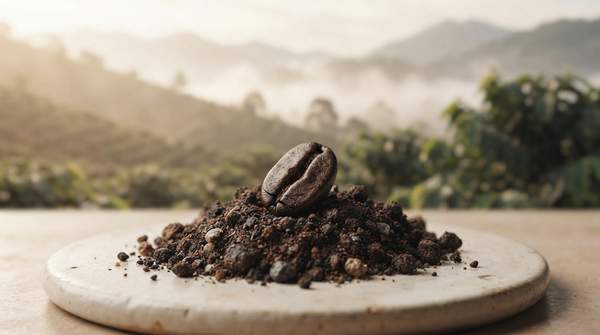
Modern food pairing often yields surprising yet harmonious combinations, such as white chocolate and caviar, or passion fruit and oysters. These pairings, once considered unconventional, are validated by the shared volatile aromatic compounds identified through gas chromatography-mass spectrometry. Another example is the pairing of coffee with garlic, which share pyrazines, creating an unexpected depth of flavor when combined thoughtfully in certain dishes.

Can home cooks apply scientific food pairing principles?

Yes, home cooks can apply these principles by exploring ingredient databases and flavor wheels that categorize foods by their dominant aromatic compounds. Resources like online flavor pairing charts, which list ingredients with shared molecular structures, allow for informed experimentation. Starting with a familiar ingredient and seeking out its lesser-known molecular companions can lead to exciting new culinary discoveries in a home kitchen.

How do cultural traditions interact with scientific flavor discoveries?

While scientific analysis reveals universal chemical compatibilities, cultural traditions provide crucial context for how these pairings are received and prepared. For example, specific spices in Indian cuisine might share compounds with European fruits, but their traditional preparation methods differ significantly. Science offers the "what" of pairing, while culture often dictates the "how" and "why" certain combinations become staples, blending objective chemistry with subjective culinary history.

The Future is Flavorful

If current trends persist, the integration of data-driven insights into everyday cooking will likely see a significant increase in novel ingredient combinations appearing in mainstream grocery stores and restaurant menus by 2026.