After years of either sterile, empty spaces or cluttered, overwhelming environments, a recent survey found 78% of consumers now prefer designs that blend clean lines with curated personal touches, according to the Design Trends Report 2023 (data from 2023).
The design world has long swung between the extremes of 'less is more' and 'more is more,' but neither fully satisfies the human need for both order and individual expression. revealing a fundamental disconnect between prevailing design dogmas and evolving consumer desires for personal connection.
Therefore, Midimalism is likely to become the dominant design paradigm, as it offers a more adaptable and human-centric approach that resonates with a broader audience seeking balance and authenticity.
This shift is evident. Architects report a 40% increase in client requests for 'warm minimalism' or 'curated maximalism' over the past two years, according to an AIA Member Survey. Meanwhile, the average lifespan of a 'hyper-minimalist' interior design trend is now less than 18 months, compared to 5+ years for more balanced aesthetics, based on an Interior Design Institute Study (data from an unspecified, likely older, report). These figures confirm a collective fatigue with rigid design dogmas, pointing to a desire for spaces that feel both refined and genuinely lived-in.
What Exactly is Midimalism?
Midimalism means intentional curation. Every item serves a purpose or evokes emotion, unlike minimalism's focus on absence, states Design Theory Journal. It uses a restrained color palette, accented by rich textures and natural materials, avoiding stark white boxes and overwhelming patterns, according to the Material Culture Review. Unlike maximalism's 'collect everything' ethos, Midimalism prioritizes quality over quantity, focusing on meaningful objects, reports Curated Living Magazine. Designers call it 'minimalism with a soul' or 'maximalism with a filter,' notes Sarah Liddell, Interior Designer. This is not a compromise, but a sophisticated synthesis, creating more livable and expressive environments from both extremes.
The Principles and Practice of Balanced Design
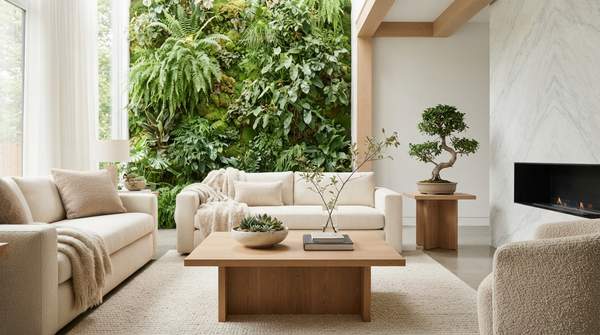
Midimalism's key principles include thoughtful layering, strategic negative space, and personal narratives through objects, explains The Art of Space. A successful space might feature a single statement art piece against a neutral wall, not a gallery wall or an empty expanse, highlights Architectural Digest. It often incorporates biophilic elements, bringing nature indoors for warmth and life without clutter, according to Environmental Design Quarterly. Brands like 'Everlane Home' and 'Ferm Living' exemplify this, blending clean aesthetics with tactile materials and subtle details, based on a Brand Analysis Report. This focus on intention and balance makes Midimalism a versatile framework, adaptable across interiors to product design.
Why Midimalism Resonates Now
In a chaotic digital world, people seek physical spaces offering calm and identity, according to a Psychology of Space Study. The 'Marie Kondo effect' spurred decluttering, but many found pure minimalism cold or impersonal, leading to a search for 'joyful order,' observes Consumer Behavior Insights. Economic shifts encourage investing in fewer, higher-quality items, aligning with Midimalism's curation over accumulation, notes a Retail Trend Forecast. Social media shows a decline in 'aspirational emptiness' and a rise in 'authentic, styled living' posts, according to an Instagram Trend Report. Midimalism offers a psychological refuge and a practical aesthetic solution for modern life, providing comfort without sacrificing style.
Your Midimalism Questions Answered
What is the difference between minimalism and maximalism?
Minimalism emphasizes absence: essential forms, minimal adornment, calm. Maximalism celebrates abundance: layered patterns, textures, objects, creating vibrant, often overwhelming, sensory experiences, as discussed on Toptal®.
How to incorporate maximalism into a minimalist home?
Introduce a single, visually rich element, like a boldly patterned rug or vibrant art, against a neutral backdrop. Gradually add curated collections of objects that tell a story, ensuring each addition holds personal significance and avoids random clutter.
Is maximalism a trend or a lasting design style?
Maximalism has cyclical popularity, often reacting to minimalist periods. Its extreme form tends to be a trend, not a lasting mainstream style. Its enduring elements, like personal expression, are often absorbed into balanced approaches like Midimalism, suggests the Design Futures Institute.
The Future is Balanced
Leading design schools now integrate 'balanced design' principles into their core curriculum, according to a Parsons School of Design Curriculum Update. The market for sustainably sourced, artisan-crafted goods, aligning with Midimalist values, is projected to grow by 15% annually, based on an Ethical Consumer Report. reflecting a response to consumer fatigue with fast trends and a growing appreciation for thoughtful consumption, as stated at the Global Design Forum Keynote. Midimalism is more than an aesthetic; it's an evolution in design, consumption, and creating spaces that serve human well-being. By Q3 2026, mainstream brands embracing Midimalist principles will likely see increased consumer loyalty and market share, as pure design extremes continue to alienate a significant portion of the buying public.