Sustainable luxury furniture today draws on two distinct material streams: genuinely new bio-fabricated substances such as mycelium composites, and familiar natural materials—hardwood, wool, latex—whose environmental claims are now verifiable through third-party certifications like FSC, GOTS, and GOLS. Understanding what each material offers, and what each certification actually guarantees, is the difference between informed eco-conscious purchasing and falling for vague "green" marketing. This guide compares the leading options and explains how to evaluate a piece beyond its surface material.
The Rise of Sustainable Luxury in Furniture
Luxury furniture makers have increasingly moved away from conventional synthetic foams and chemically treated upholstery toward what one Seattle-based furniture brand, Ecobalanza, describes as "the purest materials they can find." Press coverage of the company's work highlights FSC-certified wood frames, natural latex foam cushions, and organic wool upholstery as the building blocks of what it calls ethical luxury upholstered furniture. The broader shift reflects a design-world consensus that sustainability and high-end craftsmanship are complementary rather than competing goals.
What makes this moment distinctive is the pairing of innovation with verification. Designers now have access to materials that did not exist a decade ago, while established materials carry certification systems that allow buyers to check claims rather than take them on faith. The result is a market where the most environmentally responsible choice can also be the most refined one—but only for buyers who know what to look for.
Innovative Materials: Mycelium Composites
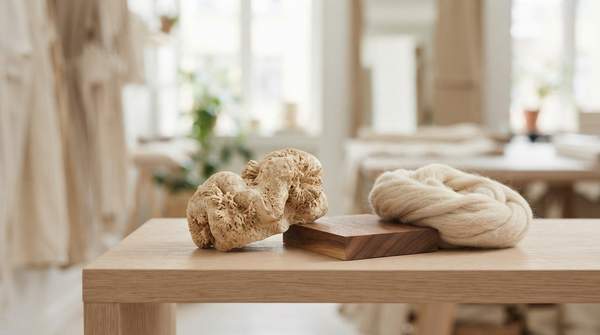
Mycelium is among the most cutting-edge materials in the current sustainable design toolkit. As the architecture and interior design firm Garret Cord Werner explains, mycelium is essentially the root structure of mushrooms, grown into molds to create rigid forms. The material can be formed into insulation panels, bricks, or lightweight furniture pieces, and it is completely natural and biodegradable, with a delicate fibrous texture that designers are beginning to embrace as a unique organic aesthetic.
Its production process is environmentally friendly in practical terms: mycelium can be grown with minimal energy or waste, and it offers remarkable insulating properties, being fire-resistant and effective at trapping heat and sound. For furniture, its application is still considered cutting-edge rather than mainstream. One honest caveat for buyers: the available descriptions of mycelium cover its composition and aesthetic qualities, but specific durability metrics for high-contact or structural furniture use—how it wears compared with a hardwood frame over years of daily use—have not been established in the same detail. That makes mycelium best suited today to pieces where its sculptural, organic texture is the point, rather than load-bearing applications.