Kintsugi, the centuries-old Japanese practice of mending broken ceramics with lacquer dusted in gold, has moved well beyond the potter's bench. Its core idea—that repair can become renewal, and that imperfection, when embraced, transforms into continuity—is now being applied as a working design philosophy in service design, interior and product design, and contemporary art. The same three principles produce strikingly different outcomes in each field: a service team might transparently announce downtime and explain what it learned, while a furniture maker might turn reclaimed pinewood and recycled construction waste into a building's defining aesthetic.
The Enduring Philosophy of Kintsugi: Beyond Repair
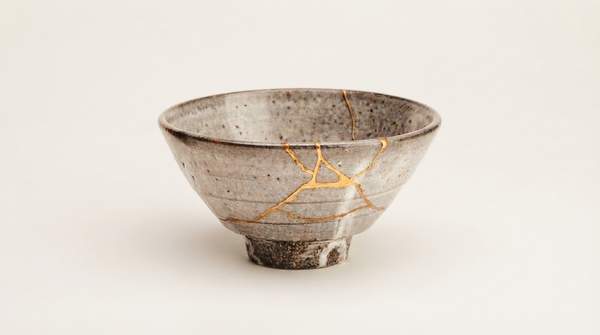
At its most literal, kintsugi joins broken pottery with gold, silver, or platinum lacquer, making the fracture a visible, even celebrated, feature rather than a concealed flaw. The craft is generally traced to 15th-century Japan, and it rests on the philosophy of wabi-sabi, which values the beauty of imperfection and the impermanence of life. But the technique has always carried more than surface beauty. As the design studio FrescoForma frames it, kintsugi treats repair as a design act in which breakage, material contrast, and visible joins shape an object's renewed identity—repair understood as form, and imperfection as purpose.
That framing is what makes the craft portable. A mended bowl is not restored to some imagined original state; it becomes a new object whose history is legible on its surface. This is the quality that modern designers across disciplines have seized on: an approach that does not hide damage but converts it into identity, narrative, and sometimes function. The remainder of this article traces how that conversion works in practice, field by field.
Three Pillars of Kintsugi in Design: Mottainai, Wabi-sabi, and History
Three interlocking concepts give kintsugi its philosophical depth, and each maps onto a distinct design value. The first is wabi-sabi, the aesthetic tradition that finds beauty in the flawed and imperfect. Studio Lahav, writing on kintsugi's use in interiors, notes that the art form is based on this philosophy of valuing imperfection and life's impermanence. In design terms, wabi-sabi legitimizes the visible mend: the crack is not a defect to disguise but a feature to compose with.
The second pillar is mottainai, the sense of regret over waste. Repairing rather than discarding an object is an ethical stance as much as an aesthetic one, and it aligns naturally with contemporary sustainability practice—reusing materials, extending the life of objects and buildings, and treating what is broken as a resource rather than refuse. The third pillar is the celebration of history: each repaired item is unique because of the individual nature of its breakage and repair. The mend becomes a record, and the object's past becomes part of its enhanced beauty rather than a liability.
Kintsugi Principles in Service Design: Embracing Imperfection and Resilience
The most conceptual translation of kintsugi appears in service design, where the "object" being repaired is an experience. Simon Whatley, a service designer and creative technologist, has mapped the philosophy directly onto the discipline. His starting point is that kintsugi embraces finding beauty in imperfection and valuing an object's history and story—and that services can be designed the same way.
Concretely, embracing imperfection means abandoning the goal of the flawless service. Whatley argues that teams should recognize and address the imperfections in user journeys, focusing on the points where users actually face challenges rather than on an idealized flow. Transparency is the kintsugi equivalent of gold in the seam: if a service has downtime, communicate it openly and use the moment to build trust by showing how the issue is handled and what is learned from it.
Resilience translates into continuous improvement and service recovery. When something breaks or fails, Whatley recommends treating it as an opportunity to learn and enhance the service, with feedback loops and robust recovery strategies that strengthen the whole system rather than merely patching the incident. Valuing uniqueness becomes customization—personalized services that reflect each user's individual needs—while the service's own history and evolution are acknowledged as part of its identity rather than papered over.
Kintsugi in Interior and Product Design: Valuing History and Sustainable Aesthetics
In physical design, kintsugi operates most visibly. The wallcovering maker Phillip Jeffries offers a direct commercial example: its award-winning Adorn collection, developed over nearly two years, is explicitly inspired by kintsugi, with artisans working in teams for hours on each panel to produce mends rendered in luxe metal leaf. Here the golden repair is not a repair at all but a decorative language borrowed from one—visible fracture lines as a deliberate aesthetic element.
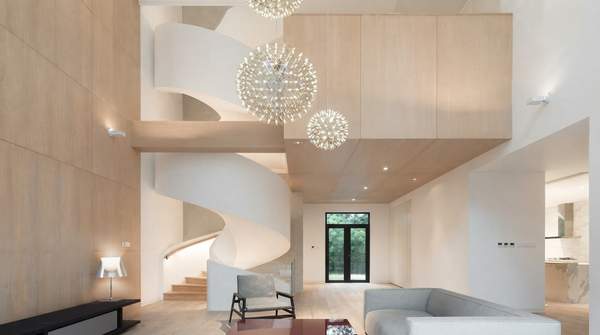
Architecture shows the philosophy at civic scale. The Holcim Foundation's documentation of a health and community center in Avalahalli, Bengaluru—a former quarry hub—describes a project that explicitly embraces kintsugi's philosophy. Recycled construction waste forms a green façade that passively cools interiors and enhances biodiversity; reclaimed pinewood is repurposed into furniture, partitions, and joinery, demonstrating cost-effective reuse of a valuable resource. The building's broken stone façade pays tribute to the site's industrial legacy, and the design gesture mirrors the shelter's mission: a place where broken individuals, once rejected by society, can heal, rebuild, and regain dignity. The architecture, as the Foundation's text puts it, "transforms flaws and past traumas into beauty and strength, just as Kintsugi does."
Studio Lahav extends the same logic to interiors more broadly, treating kintsugi pottery as a reminder that brokenness can still be beautiful and encouraging the incorporation of mended pieces as collectibles that carry emotional and family narratives into a space.
Kintsugi Principles in Modern Design: A Comparative Framework
The clearest way to see how the philosophy travels is to hold the principle constant and watch the design action change. The table below maps each core principle onto its characteristic expression in three fields. Use it to evaluate existing work or to brief a kintsugi-inspired project: identify which principle you are invoking, then check whether the concrete design choice matches the field's characteristic move.
| Kintsugi Principle | Service Design | Interior / Product Design | Contemporary Art |
|---|---|---|---|
| Embracing Imperfection | Transparently communicate downtime and service flaws, using honesty to build trust—acknowledging flaws rather than concealing them. | Visible mends and fracture lines become decorative elements, as in metal-leaf wallcoverings inspired by golden repair—redefining strength by finding beauty in the imperfect. | Flaws are celebrated as narrative, with the break itself carrying the work's meaning. |
| Resilience / Adaptation | Feedback loops and service-recovery strategies that treat failure as a learning opportunity, fostering continuous improvement and adaptation. | Reuse of recycled construction waste and reclaimed materials, as in the Bengaluru center's green façade and pinewood joinery—transforming brokenness into a story of recovery and dignity. | Recovery and repair are presented as the subject, making restoration itself the artistic statement. |
| Valuing History / Uniqueness | A service's history and evolution are acknowledged as part of its identity, including the journey and its past experiences. | Repairs are left visible so the restored surface tells a story—unique works created from broken pieces, celebrating the object's past as part of its enhanced beauty. | The object's history becomes the content of the piece, its past made central to its value. |
The comparison reveals the framework's central insight: "embracing imperfection" is not one design move but a family of moves. In service design it is a communication choice; in product design it is a decorative and material choice; in art it is a narrative choice. What stays constant is the refusal to conceal.
Integrating Kintsugi for Resilient and Meaningful Design
Designers and practitioners across various fields should actively integrate Kintsugi's core principles—embracing imperfection, fostering resilience, and valuing history—to create more authentic, sustainable, and human-centered designs. The philosophy is portable precisely because it is procedural rather than stylistic: identify the flaw, the waste, or the history; make it visible; and convert it into identity, trust, or beauty. A service team can adopt it tomorrow by publishing what it learned from its last outage; an architect can adopt it by specifying reclaimed materials and letting the building's site history show in its façade.
The measurable indicator of adoption is increased visibility of design projects that transparently showcase repair, adaptive systems, or material histories, rather than concealing flaws, in industry publications and project showcases. Watch the award lists and case-study pages: when mended seams, recovery narratives, and reclaimed materials stop being novelty items and start appearing as standard practice, kintsugi will have completed its journey from ceramic repair to design doctrine.
Sources
- Kintsugi Design: Meaning, Philosophy & Contemporary Uses — FrescoForma.
- Creative Ways to Use Kintsugi Pottery for Interior Design Projects — jac lahav
- Applying the philosophy behind Kintsugi to service design – Simon Whatley — Simon Whatley – Service designer, creative technologist and coach
- Discover PJ’s Kintsugi-Inspired Design And How it's Made — BLOG
- Healing Through Design — Holcimfoundation