The most sophisticated California homes do not announce themselves. According to designers working in the "quiet luxury" tradition, their impact comes from quality materials, texture, and craftsmanship rather than statement décor. That means the difference between a home that feels decorated and one that feels collected lies largely in how natural materials—warm woods, natural stone, tactile textiles—are selected and, more importantly, how they are combined. This article lays out the philosophy behind that approach and a practical framework for choosing a primary material and its complements.
The Essence of Quiet Luxury and California Casual Design
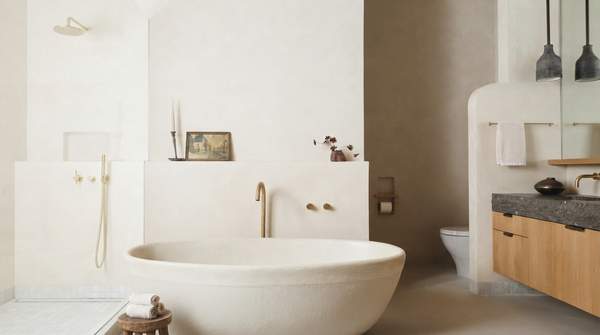
Quiet luxury has become a popular phrase in interior design, but as the team at WRF Design Center observes, the idea behind it is hardly new: the most sophisticated homes have long relied on quality materials, thoughtful proportions, craftsmanship, and restraint rather than conspicuous décor. In this view, warm woods, natural stone, tactile fabrics, and understated metals create depth in California casual interiors, and repeating complementary materials throughout the home produces a cohesive, timeless look.
The philosophy is as much about feeling as appearance. Writing for Reggio Register, Chelise Morgan distills quiet luxury into a few working principles: impeccable craftsmanship prioritizing artisanal quality and timeless materials over mass production; understated elegance built on minimalist forms and muted palettes; a function-first philosophy balancing beauty with effortless utility; and authentic materials—natural stone, rich woods, solid metals, high-quality textiles. Luxury, in her formulation, "isn't shouted — it's whispered through impeccable quality and functional beauty."
Craftsmanship and Timelessness: The Pillars of Natural Material Selection
Garret Cord Werner Architecture & Interiors describes a shift in what high-end homeowners want: residences that feel "quietly powerful and deeply livable," with an understated confidence that comes from authentic, high-quality materials. The firm argues that performance, resilience, and craft have become the new pillars of luxury home design, with every material expected to earn its keep. Wood paneling and stone floors are not merely aesthetic choices—they contribute thermal mass, develop patina over time, and connect the home to its natural surroundings.
This is where durability and timelessness converge. Honeycomb Home Design recommends durable finishes and timeless design elements precisely to reduce the need for replacement, naming natural stone countertops and hardwood flooring as choices that offer both durability and elegance while minimizing waste. The sensory dimension matters too: as the Garret Cord Werner team notes, natural materials can impart "a visceral sense of calm and connection to nature," and in a luxury setting those sensory qualities are part of the appeal.
Integrating Wood: Warmth, Texture, and Cohesive Tones
Wood is the workhorse of the quiet luxury palette. Merit Kitchens' design guidance describes it as tactile, grounding, and rich in natural variation, making every space feel bespoke. The specific species sets the mood: dark-stained walnut or rift-cut oak brings depth and refinement, while lighter woods such as white oak or maple create an airy, Scandinavian-inspired ambiance.
When several wood elements share a room, the challenge is making them feel intentional rather than accidental. WRF Design Center's guidance on mixing materials emphasizes creating relationships among different elements so the space reads as layered rather than busy. The practical test is cohesion: do the wood tones share undertones, repeat across the room, or contrast deliberately? Visible variation and signs of age, the firm notes, can become part of a material's character rather than automatically making it feel dated—stone carries natural markings, and many linen textiles soften with use.
Embracing Stone: Grandeur, Pattern, and Seamless Flow
Natural stone supplies what wood cannot: permanence, drama, and pattern drawn from geology rather than ornament. For countertops and surfaces, Reggio Register's guidance points to high-grade natural stone paired with hand-finished wood cabinetry, with textures taking precedence over ornate patterns.
Placement determines the effect. Merit Kitchens suggests a full-height slab backsplash in marble or quartzite, extending from countertop to upper cabinets, so that the uninterrupted flow of veining adds drama and continuity—what the firm calls the effortless elegance of natural kitchen design. The key discipline is letting one stone carry the pattern while other surfaces stay quiet; stone used for character works best when it is not forced to compete with itself.
Connecting Indoors and Outdoors: A California Design Imperative
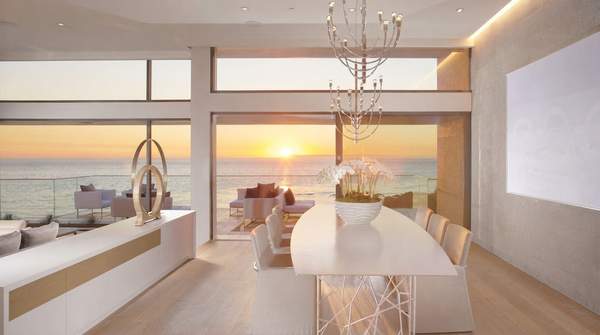
What distinguishes the California casual variant of quiet luxury is the indoor-outdoor character of the home. WRF Design Center's approach considers materials alongside the architecture, lifestyle, and relationship to the outdoors, producing interiors that feel relaxed, refined, and distinctly personal. The firm's advice for keeping quiet luxury from looking trendy follows the same logic: start with the architecture and lifestyle of the home rather than a particular trend, build the palette around timeless flooring, cabinetry, stone, furniture, and textiles, then repeat complementary materials throughout so the look can evolve over time.
Texture is the connective tool. Varying smooth, rough, soft, and matte surfaces, the firm notes, can make a space feel sophisticated without sacrificing the simplicity of the overall style. A material should also make sense for the architecture, climate, lifestyle, maintenance expectations, and intended use of the space—especially for permanent selections such as flooring, cabinetry, countertops, and architectural stone.
Decision Framework for Natural Material Selection
The framework below maps each material choice to the aesthetic goal it serves, the principle that governs its use, and where it typically applies. Read it as a sequence: pick the primary material for the most permanent surfaces first, then choose complements that share its undertones or contrast with it deliberately.
| Material | Aesthetic Goal | Key Principle | Common Application |
|---|---|---|---|
| Wood | Adds warmth, texture, and elegance; makes a space feel organic yet curated | Create relationships among different wood tones through shared undertones, repetition, or deliberate contrast to avoid a busy look | Cabinetry (hand-finished), flooring, architectural elements |
| Natural stone | Provides durability, elegance, and a sense of quiet power | Let one stone carry the pattern; use full-height slab backsplashes so uninterrupted veining adds drama and continuity | Countertops, full-height backsplashes, architectural stone |
| Materials in combination | Creates depth, contrast, and cohesion for a layered, dynamic, personal feel | Balance warmth and pattern intentionally; vary smooth, rough, soft, and matte surfaces rather than adding ornament | Whole-home palettes where complementary materials repeat throughout |
| Foundational selections | Define the overall character and timelessness of the home | Prioritize artisanal quality and materials that age gracefully over mass production; match material to architecture, climate, and use | Flooring, cabinetry, countertops—the permanent layer chosen first |
The reasoning behind the table is straightforward. Permanent selections define everything else, so they should be chosen against architecture and lifestyle rather than current aesthetics. Wood and stone then divide the labor: wood for warmth and tactility, stone for pattern and permanence. Majestic Kitchens & Baths frames the payoff well: a space that mixes materials well feels layered, dynamic, and completely personal, and it is an approach that "evolves beautifully over time" rather than dating with a trend.
Cultivating a Timeless and Collected Home
Homeowners should prioritize natural materials that offer inherent character, texture, and durability, selecting them with an eye toward how they will interact and age gracefully within the overall design. The measurable indicator of success is concrete: the home feels cohesive, calm, and sophisticated, with materials that enhance the space without requiring excessive ornamentation, and elements that seamlessly connect indoor and outdoor environments. If a room needs added decoration to feel finished, that is the signal to revisit the material relationships—shared undertones, repeated complements, one stone carrying the pattern—rather than to add more.
Sources
- The Quiet Luxury Materials That Work Best in California Casual Homes - WRF Design Center
- The Rise of Quiet Luxury Style in the Modern Kitchen — Reggio Register
- Innovative and Sustainable Materials in Residential Design | Garret Cord Werner Architects & Interior Designers
- HONEYCOMB INTERIORS — HONEYCOMB HOME DESIGN
- Natural Kitchen Design: Elegant Ways to Use Wood, Stone & More — Merit Kitchens Design Centre Langley
- Materials Kitchen Design: Create Depth, Contrast & Cohesion — Majestic Kitchens & Baths