In the first half of 2025, South Korea became the world's second-largest exporter of beauty products, surpassing France, a historic beauty powerhouse. This reordered global trade, with South Korean beauty exports increasing by 15% to a record $5.5 billion, according to the BBC. South Korean beauty exports increasing by 15% to a record $5.5 billion signals K-Beauty's readiness for global expansion.
K-Beauty rapidly captures global market share with highly specific, ingredient-focused products and agile innovation. In contrast, many established Western brands still rely on broad marketing and less transparent, slower-to-market formulations. This tension highlights a stark contrast in strategic approaches, where traditional models struggle to keep pace with swift, science-backed offerings from South Korea.
Based on K-Beauty's sustained growth and innovative edge, traditional beauty giants must increasingly acquire K-Beauty innovators or fundamentally overhaul their R&D and product development strategies to remain competitive. K-Beauty's momentum suggests a lasting alteration in how beauty is conceived, produced, and marketed worldwide.
The global K-beauty market grew by 53% in the year ending January 2026, according to cosmeticsbusiness. The global K-beauty market grew by 53% in the year ending January 2026, confirming K-Beauty's transition from a niche trend to a dominant force in international trade. Its rapid ascent challenges the established order, forcing a re-evaluation of long-held industry practices.
The Ingredient-Driven Revolution
Korean skincare products in 2026 feature precise active concentrations: hyaluronic acid in three molecular weights, centella asiatica at over 80%, and niacinamide at 10%, according to skinorea. These formulations prioritize high-potency ingredients for targeted results. Consumers seek transparent ingredient lists and demonstrable efficacy, a demand K-Beauty consistently meets.
For instance, COSRX Advanced Snail 96 Mucin Power Essence contains 96% snail mucin filtrate, and SKIN1004 Madagascar Centella Ampoule Cleansing Foam has 84% centella asiatica extract, both according to skinorea. Such high concentrations directly address consumer desire for products that deliver on their promises, building loyalty through tangible results. Such high concentrations directly address consumer desire for products that deliver on their promises, building loyalty through tangible results, driving widespread adoption across diverse categories.
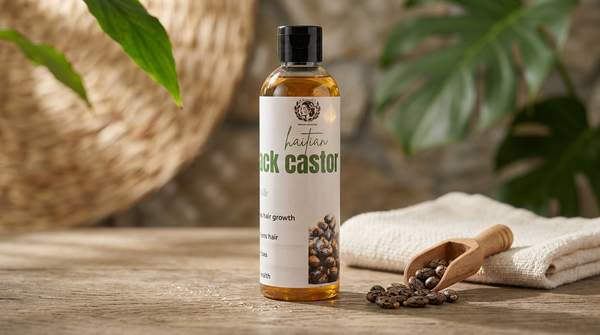
K-Beauty's influence extends beyond traditional skincare. K-beauty hair serums are growing by 80% year-on-year in the UK, compared with total hair care at 18%, according to cosmeticsbusiness. K-beauty hair serums are growing by 80% year-on-year in the UK, compared with total hair care at 18%, demonstrating the broad appeal of K-Beauty's approach, forcing traditional brands to consider similar ingredient-focused strategies across their entire product portfolios.
The precise, high-concentration formulations of K-beauty products, like COSRX's 96% snail mucin essence, prove consumers now prioritize demonstrable efficacy over aspirational marketing. The precise, high-concentration formulations of K-beauty products, like COSRX's 96% snail mucin essence, prove consumers now prioritize demonstrable efficacy over aspirational marketing, reshaping product development expectations: brands must compete on formulation strength and ingredient transparency, a departure from legacy marketing-first strategies.
Western Brands Play Catch-Up
L'Oréal acquired a South Korean conglomerate, including the brand Dr.G, in late 2024, according to the BBC. L'Oréal's acquisition of a South Korean conglomerate, including the brand Dr.G, in late 2024, according to the BBC, acknowledges K-Beauty's market power. Rather than developing agile innovation internally, established players integrate successful K-Beauty brands through acquisition—a costly but swift method to gain market share and expertise.
Global beauty e-commerce value sales grew by 18% in 2025, significantly outpacing offline growth, according to NIQ. Global beauty e-commerce value sales grew by 18% in 2025, significantly outpacing offline growth, according to NIQ, aligning with K-Beauty brands' inherent agility and digital-first marketing. K-Beauty brands thrive in e-commerce, leveraging social media and direct-to-consumer models. K-Beauty brands thrive in e-commerce, leveraging social media and direct-to-consumer models, suggesting traditional players find it more effective to acquire K-Beauty brands than organically compete with their agile, e-commerce-savvy innovation.
K-beauty's 131% two-year growth, according to cosmeticsbusiness, and L'Oréal's acquisition of Dr.G signal established players are trading internal R&D for external M&A. K-beauty's 131% two-year growth, according to cosmeticsbusiness, and L'Oréal's acquisition of Dr.G signal established players are trading internal R&D for external M&A, revealing their traditional innovation pipelines are too slow for agile K-beauty trends. Western brands must adapt their slower, often bureaucratic, product development cycles to match K-Beauty's rapid iteration.
Traditional Western beauty giants no longer compete on legacy brand recognition but on ingredient transparency and rapid innovation. They are losing this battle, necessitating a strategic pivot. K-Beauty's success highlights a consumer base valuing clear, effective formulations over historical brand loyalty, pressuring older brands to evolve or consolidate.
Beyond Skincare: Expanding Influence
K-beauty grew by 131% over the past two years, according to cosmeticsbusiness. K-beauty grew by 131% over the past two years, according to cosmeticsbusiness, confirming K-Beauty is a foundational shift in consumer preferences, not a fleeting trend. Its consistent expansion across diverse markets solidifies its position as a major player.
In the UK, K-beauty sales grew by 65% in value terms, according to cosmeticsbusiness, contrasting with the overall UK skincare category's 12% growth in the year ending March 2026. In the UK, K-beauty sales grew by 65% in value terms, according to cosmeticsbusiness, contrasting with the overall UK skincare category's 12% growth in the year ending March 2026, suggesting K-Beauty's impact is highly concentrated and disruptive, actively creating new demand and shifting market share from established brands by directly appealing to consumers seeking more effective and transparent beauty solutions.
K-Beauty's influence expands beyond skincare; hair serums grew 80% year-on-year in the UK, according to cosmeticsbusiness. K-Beauty's influence expands beyond skincare; hair serums grew 80% year-on-year in the UK, according to cosmeticsbusiness, demonstrating disruptive potential across multiple beauty categories, forcing traditional brands to rethink entire product portfolios. K-Beauty's influence expands beyond skincare, with hair serums growing 80% year-on-year in the UK, according to cosmeticsbusiness, confirming universal demand for highly concentrated, ingredient-focused products that deliver visible results, pushing Western brands to diversify innovation.
The Future of Global Beauty Innovation
K-Beauty's enduring success requires all global beauty market players to prioritize rapid innovation, ingredient transparency, and agile e-commerce strategies. The industry now values product efficacy, backed by clear ingredient science, over traditional marketing. Brands failing to adapt risk losing market share to responsive competitors.
Western beauty conglomerates face a critical choice: invest heavily in transforming internal R&D and product development to match K-Beauty's agility, or continue costly acquisitions of successful K-Beauty brands. The latter, while providing immediate market access, may not be sustainable long-term without fundamental changes to core innovation. A blend of internal reform and strategic acquisitions offers a more robust path.
Consumer demand for transparency and high-concentration active ingredients, exemplified by COSRX's 96% snail mucin, according to skinorea, forces a re-evaluation of product development. Traditional brands are ill-equipped to replicate this agility without significant structural changes. By Q3 2026, many established Western beauty brands will face increased pressure to demonstrate tangible improvements in formulations and marketing transparency. Companies like L'Oréal, having invested in K-Beauty acquisitions, will likely integrate these agile strategies into their broader portfolio. The competitive edge in beauty now rests on scientific backing and rapid iteration, not solely on brand heritage or extensive advertising.