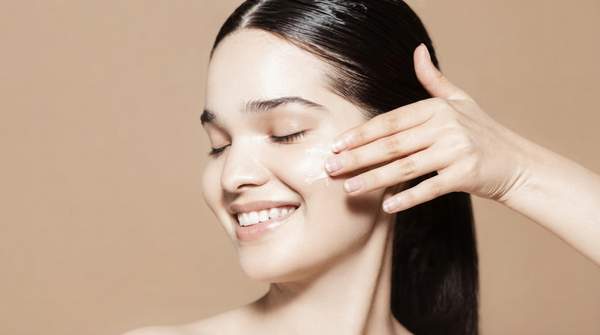
“Bloom skin” is the K-beauty aesthetic that has been displacing “glass skin” as the 2026 ideal — and the difference between them is more than a change of finish. Where glass skin chased a glossy, mirror-like reflection achieved through heavy product layering, bloom skin aims for hydrated, strengthened, even-toned skin that glows naturally rather than shines. According to aesthetic doctor and Korean skincare expert Dr. Christine Hall, the ethos of bloom skin is “the underlying skin health producing a natural glow.” The shift is also a corrective: dermatological research presented at the European Academy of Dermatology and Venereology (EADV) Congress in Vienna in September 2026 found that almost 95 percent of viral Korean-skincare videos analyzed contained at least one misleading claim.
The Evolution of K-Beauty: From Glass to Bloom
Glass skin has been mainstream globally since emerging in the 2010s, spawning hydrogel masks, snail mucin products, the double-cleanse and layered essences. But industry reporting notes that overcomplicated routines — sometimes doing more harm than good — and products designed purely for surface shine are now giving way to approaches focused on longer-lasting skin health and a lit-from-within glow. Korean Beauty Australia frames bloom skin as “less a new trend and more where the glass skin philosophy was always heading: better barrier health, not more products.” The change is visible in the language of the trend itself: from reflection to condition, from performance to consistency.
Understanding 'Glass Skin': The Mirror-Like Ideal
Glass skin is the highly reflective, smooth-looking complexion popularized by Korean beauty routines: poreless, dewy, almost translucent in its most aspirational form. TRU Biologix's medical team describes it as “ultra-smooth and reflective, almost wet-looking,” driven mainly by hydration and smooth texture. Achieving it typically involves layers of hydration, gentle exfoliation and products that leave a dewy surface — a multi-step commitment that became a social-media spectacle. The goal is a visible surface effect: skin so glossy it looks like glass. That emphasis on shine-for-shine's-sake, and the elaborate routines built around it, is precisely what the newer aesthetic reacts against.
Embracing 'Bloom Skin': A Focus on Inner Health
Bloom skin keeps the hydration but drops the emphasis on shine. “The aesthetic is evolving from ultra-reflective glass skin to what I call bloom skin — hydrated, strengthened, even-toned skin that looks naturally luminous rather than glossy,” the Australian integrated facialist April Brodie told Refinery29. Crucially, this is not a term that originated in Korea: it was coined by Brodie, an Australian practitioner, to describe a shift happening within K-beauty. Hall draws the same contrast: “While glass skin is known for its ultra dewy, almost mirror-like finish, bloom skin is about creating a softer and healthy looking radiance… The skin is not meant to look wet or overly glossy, instead the goal is skin that looks naturally luminous and plump.” Pores and texture can remain visible; the goal is comfort and health, not perfection.
Bloom Skin vs. Glass Skin: A Quick Comparison
The table below contrasts the two ideals across parallel attributes, isolating the core philosophical shift: glass skin prioritizes surface reflection, while bloom skin cultivates barrier health beneath it.
| Dimension | Glass Skin | Bloom Skin |
|---|---|---|
| Aesthetic goal | Ultra-smooth, clear, highly reflective complexion | Hydrated, strengthened, even-toned skin that is plump and healthy-looking |
| Visual finish | Ultra-dewy, mirror-like, often described as “wet-looking” or glossy | Soft, natural radiance — like a healthy flower rather than a polished mirror; it glows rather than shines |
| Underlying principle | Intense hydration and smooth texture; emphasis on the visible surface effect | Overall skin condition and barrier strength supporting the skin's natural functions beneath the surface |
| Routine focus | Complex, multi-step layering of many products to build a dewy surface | Minimalist, barrier-first routine: gentle cleansing, consistent moisturizing, intentional treatment, daily sun protection |
Read side by side, the framework helps you identify which aesthetic you actually want: a polished, light-reflecting surface, or a comfortable complexion whose glow comes from condition. Bloom skin is also described as better suited to sensitive or reactive skin, because it favors fewer harsh actives and more calming ingredients such as centella asiatica and multi-peptide complexes.
The Principles of a 'Bloom Skin' Skincare Routine
Brodie's prescription is discipline over quick fixes: “Radiant skin is created through barrier health, consistency, and discipline, not quick fixes. Achieving this look comes down to hydration layering, gentle exfoliation, and barrier-repair ingredients.” A minimalist bloom-skin routine follows four principles.
- Gentle cleansing: rinse or cleanse gently in the morning; a gentle cleanse again in the evening, without stripping the skin.
- Deep hydration: consistent moisturizing and hydration layering, keeping the barrier comfortable.
- Intentional treatment: one optional treatment chosen for a specific function — a regenerative active or barrier-supporting serum — not because it is trending, and not stacked with every other active in the cabinet.
- Daily protection: a lightweight, broad-spectrum sunscreen every day, which Korean Beauty Australia calls non-negotiable because barrier work is undone quickly without UV protection.
Eluminous Beauty adds a realistic timeline: minor irritation may improve in days, while a mildly disrupted barrier can take roughly two to four weeks to feel normal again — guides, not guarantees.
Origin and Context: Why 'Bloom Skin' is Trending Now
The trend's timing is not accidental. Research presented at the EADV Congress in Vienna at the end of September 2026, summarized by MedicalXpress, screened top videos across five Korean-skincare search terms and assessed 38 of them for dermatological claims. The findings raised serious safety concerns: 95 percent contained at least one misleading claim, 84 percent failed to account for different skin types, 45 percent promoted excessive combinations of active ingredients without appropriate safety guidance, and 32 percent promised instant results. Only one video mentioned irritation risk, only two mentioned sun protection, and none mentioned contact dermatitis or seeing a dermatologist.
As Eluminous Beauty puts it, the takeaway is not that Korean skincare principles are unsafe — gentle cleansing, hydration and barrier support remain useful foundations. The problem is the one-size-fits-all routine. Bloom skin, in that sense, is less a new look than a correction of the product-heavy, virally amplified version of glass skin: better basics, used consistently.
Adopting the Bloom Skin Philosophy for Lasting Radiance
Readers who want this look should prioritize a minimalist, barrier-focused routine built on gentle cleansing, deep hydration, intentional treatment and daily protection — choosing evidence-based formulas over marketing trends, as Brodie advises. Bloom skin is a beauty term, not a medical diagnosis, and no article routine replaces a dermatologist for ongoing skin problems. The measurable indicator of success is the one the evidence itself names: improved skin comfort, reduced irritation, and a naturally luminous complexion that feels hydrated and strong — skin that stings less, holds moisture more comfortably and, per Brodie, looks “naturally luminous rather than glossy.”
Sources
- What Is Bloom Skin? The 2026 K-Beauty Trend — ViaJiin
- Bloom Skin vs. Glass Skin: Why Barrier Repair is the Future of Glowing — Skyn ICELAND
- Bloom Skin vs. Glass Skin: Why Healthy Glow Beats the Mirror Finish — Eluminous Beauty
- Is ‘bloom skin’ the new ‘glass skin’ in K-beauty? — Cosmeticsbusiness
- What Is ‘Bloom Skin’? The 2026 K-Beauty Trend Replacing Glass Skin — Korean Beauty Australia
- Bloom Skin vs Glass Skin: What’s the Difference? — TRU Biologix
- 6 Korean Beauty Trends Shaping 2026: Moving From "Glass Skin" To "Bloom Skin" — Refinery29