The fastest way to pick a facial massage tool is to ignore the marketing and ask one question: how deep does it work? A randomized controlled trial comparing facial rollers and gua sha found that the two techniques rest on different mechanical principles. Rollers primarily affect superficial circulation and lymphatic drainage, while gua sha manipulates deeper tissue in ways that change muscle tone and fascial organization. That single distinction—surface versus depth—explains most of what each tool can and cannot do for your skin.
Manual Mastery: Facial Rollers and Gua Sha
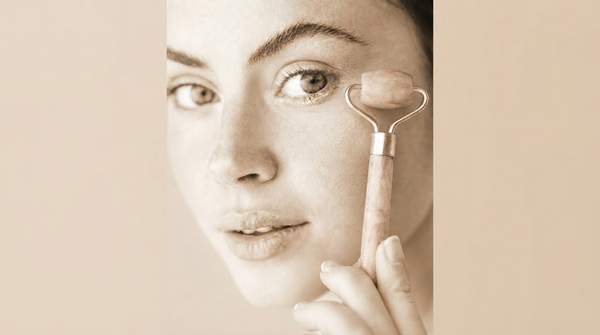
Facial rollers are the gentlest of the manual tools. Made in materials such as rose quartz and jade, they glide across the skin's surface, and retailers describe their purpose as stimulating lymphatic drainage beneath the skin's layers, increasing microcirculation and reducing puffiness. Because the stone barely compresses the tissue, the action stays shallow—the trial found rollers primarily influence skin elasticity parameters rather than muscle properties.
Gua sha, by contrast, is a scraping technique, not a rolling one. Typically made from jade, rose quartz or stainless steel, the flat stone is drawn firmly across the face, pressing into muscle and fascia. The trial analyzes this through the lens of IASTM—instrument-assisted soft tissue mobilization—a framework used in physical therapy for deeper tissue work. Sandra Chiu, a certified acupuncturist and traditional Chinese medicine practitioner in Brooklyn, describes cosmetic gua sha as "a gentler, softer variation" of the traditional treatment that improves blood circulation, releases excess muscle tension and smooths fascia, the connective tissue that binds muscle fibers, blood vessels and bone.
The High-Tech Approach: Multi-Therapy Wands
Electronic wands bundle several therapies into a single handheld device. One device documented by Allure combines four: red light therapy, therapeutic warmth, galvanic current and vibrating facial massage. The reported division of labor is specific to each modality—gentle vibration is described as helping depuff and boost circulation, warmth (capped at 107°F, about 11 degrees above body temperature) as encouraging lymphatic drainage, galvanic current as enhancing absorption of skincare products, and red light as softening the appearance of fine lines over time. The device even pulses every three minutes to prompt you to move to the next area of the face.
What the electronic category lacks, however, is the physiological specificity that the manual tools now have. The trial directly measured which tissue properties rollers and gua sha each change; for wands, the evidence in these sources amounts to reported benefits per modality rather than controlled measurements of contour, tone or elasticity. That does not make the wands useless—it means the mechanism-to-outcome links are less firmly established, and buyers are relying more on manufacturer and practitioner claims.
Facial Massage Tool Comparison: Mechanism to Goal
The table below classifies the three tool categories by how they work and what that mechanism makes them best suited for. Read it as a decision matrix: find your primary goal in the right-hand column, then trace back to the mechanism that produces it.
| Tool Type | Primary Mechanism | Target Tissue Depth | Best For (Primary Goal) |
|---|---|---|---|
| Facial roller (jade, rose quartz) | Gentle rolling across the skin's surface | Superficial—skin surface and lymphatic system | Reducing puffiness, improving microcirculation, supporting skin elasticity |
| Gua sha stone (jade, rose quartz, stainless steel) | Firm scraping via IASTM-style technique | Deeper—facial muscles and fascia | Releasing muscle tension, smoothing fascia, sculpting contours |
| Multi-therapy wand | Combined vibration, warmth, galvanic current and red light | Varies by modality; not precisely defined in current evidence | General skin improvement: depuffing, product absorption, fine-line softening (reported) |
The pattern to notice is that depth follows force. A roller's light, gliding motion cannot reach the muscle layer, so its benefits stay at the level of circulation and fluid drainage. Gua sha's sustained, angled pressure reaches fascia and muscle, which is why the trial associated it with muscle tone changes rather than elasticity changes. The wand sidesteps this manual logic entirely by adding energy-based inputs, each targeting a different reported outcome.
Choosing Your Tool: A Goal-Oriented Guide
For morning puffiness and circulation, choose a roller. Its superficial action is precisely what de-puffing requires: excess fluid sits near the surface, and the rolling motion moves it through lymphatic channels. Retailers position rollers specifically for drainage, de-puffing and a brighter complexion, and the trial confirms the circulation pathway, while noting the measurable effect lands on skin elasticity.
For tension and contouring, choose gua sha. Jaw clenching, brow furrowing and general facial tightness live in the muscle and fascia, not the skin's surface, so a roller cannot address them. Gua sha's deeper scraping is the mechanism that reaches them—Chiu describes tension release and fascial smoothing as its core purposes, and the trial found it affects muscle tone properties. This is also the tool aestheticians turn to when the goal is lifting and toning the face.
For product absorption and multi-target routines, a wand is the category to consider, with a caveat. Galvanic current is described as helping skincare products absorb better, and the four-modality design lets one device address puffiness, circulation and fine lines in a single session. But the benefits are reported per modality rather than demonstrated in a controlled comparison, so weigh the convenience against the thinner evidence base.
Making an Informed Choice for Your Skincare Routine
The decision: choose a facial massage tool based on its specific mechanism of action and how that mechanism aligns with your primary skincare goal, rather than general marketing claims. A roller buys you superficial circulation and drainage, gua sha buys you muscle and fascia work, and a wand buys you modality breadth with less confirmed depth.
The measurable indicator: once you have selected a tool matched to your goal—say, a roller for puffiness or gua sha for contouring—watch for improvements in your skin's appearance or feel that are consistent with that tool's mechanism, such as reduced morning puffiness after rolling or released jaw tension after scraping. If the change you observe matches the mechanism in the comparison above, you have chosen well; if not, the mismatch between goal and tissue depth is the first place to look.
One boundary worth keeping in view: all of this applies to cosmetic and wellness use, not medical treatment. And the manual-tool comparison comes from a single randomized controlled trial—the most precise evidence here—so expect the picture for electronic wands to sharpen as more controlled studies emerge.
Sources
- Comparative Effects of Facial Roller and Gua Sha Massage on Facial Contour,… — PMC
- Face Tools: Face Roller & Gua Sha — RAS Luxury Skincare
- The Best Facial Massage Tools — Joanna Czech
- Morning Puffiness Has Nothing On These Face Massagers — Allure