A true bespoke perfume is not a blend you assemble yourself on a Saturday afternoon. It is an original formula, built from raw materials by a professional perfumer, developed in a laboratory, refined across multiple consultations, and then archived so that only you can reorder it. The distinction matters because the market offers two very different experiences under the "custom fragrance" banner: a genuine commission that The Olfactory Art Studio compares to commissioning a portrait, and guided workshops that produce what fragrance expert Sylvaine Delacourte calls a "perfume sketch." The price gap is just as stark: entry-level bespoke services typically run €5,000 to €10,000, while premium offerings can exceed €100,000 for full ownership of the formula.
The Allure of Bespoke Perfumery
What draws luxury clients to a bespoke commission is exclusivity that no retail fragrance can offer: a scent that is not recreated for anyone else. According to Scento's editorial coverage of the bespoke market, the process is intricate, involving multiple consultations, drafts, and detailed skin chemistry analyses to craft a scent that embodies the client's essence. Lloyd Naake, Managing Director of The Perfume Studio, describes the experience as "closer to commissioning a work of fine art than purchasing a cosmetic item."
That artistic framing also explains why the journey can feel daunting. Clients are often asked to describe deeply personal memories or emotions without the technical vocabulary a perfumer uses daily. The good news, according to The Olfactory Art Studio's account of its own commission process, is that no prior perfume knowledge is required: the consultation itself guides clients through sensory language, translating everyday descriptions into the raw materials of perfumery.
Bespoke Perfumery vs. Perfume Workshops: A Decision Framework
The fastest way to choose the right experience is to compare what each one actually produces. The table below contrasts a true bespoke commission, as described by The Olfactory Art Studio, with the workshop model characterized by Sylvaine Delacourte, whose guide to bespoke perfume creation notes that workshop participants leave with a "perfume sketch" that has not been laboratory-tested and cannot, in theory, be applied to the skin—which is why workshops typically require a signed waiver.
| Dimension | True Bespoke Commission | Perfume-Making Workshop |
|---|---|---|
| Process | Original formulation from raw materials, laboratory development, multiple consultations and drafts; typically 6–8 weeks from consultation to delivery | Mixing existing bases and accords in a single guided session; a fun, educational experience, but not bespoke in the true sense |
| Creator | A professional perfumer builds a new, unique formula from scratch, guiding the client without imposing personal preferences | The client mixes existing components under an instructor's guidance; no new formula is created from scratch |
| Materials | Raw materials selected for the client, with natural or synthetic components affecting longevity and scent profile | Pre-existing bases and accords supplied by the workshop |
| Outcome | A unique fragrance reflecting the client's identity, refined through skin chemistry analyses, with the formula archived for future reorders | A "perfume sketch" that has not been laboratory-tested and cannot, in theory, be applied to the skin; workshops typically require a waiver |
| Exclusivity | The fragrance is not recreated for others; the client holds a custom formula | None guaranteed; components are shared with other participants |
| Typical Cost | Entry-level services typically €5,000–€10,000; premium offerings can exceed €100,000 for full formula ownership | Not specified in the sources reviewed for this comparison |
Read the table as a decision aid rather than a ranking. If your goal is a wearable, exclusive scent developed for your skin, only the left column delivers it. If your goal is an enjoyable, hands-on introduction to how fragrances are constructed, the right column serves that purpose at a fraction of the commitment.
The Bespoke Fragrance Journey: A Step-by-Step Guide
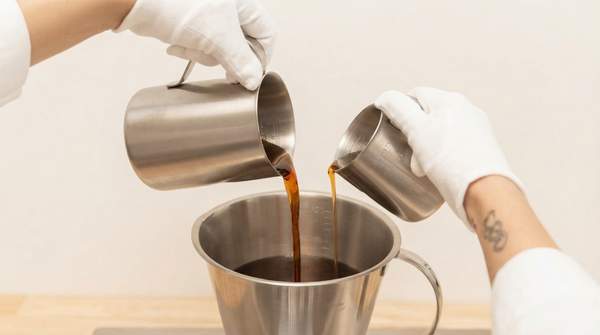
Based on how The Olfactory Art Studio describes a private fragrance commission, the process unfolds in four broad stages. First comes the initial consultation, where the perfumer guides the client through sensory language, helping translate memories and emotions into olfactory directions; no prior perfume knowledge is needed. Second is formulation and development: the perfumer works from raw materials, creating an original formula that requires laboratory development rather than simple mixing.
Third is review and refinement. Scento's editorial account notes that the process involves multiple consultations and drafts, along with detailed skin chemistry analyses, so the client should expect to evaluate trial versions and give feedback rather than receive a finished scent in one pass. Fourth is final delivery and archiving: the completed formula is documented and archived to ensure continuity, meaning the client can reorder the same fragrance in the future. The full journey typically takes six to eight weeks from consultation to delivery. One boundary worth knowing in advance: reputable bespoke services do not copy commercial fragrances, so clients hoping to clone a scent they already wear will need a different brief.
Key Considerations for Commissioning Your Signature Scent
Communicating your vision. The hardest part for most clients is articulating what they want. Scento's coverage highlights that clients are often tasked with describing deeply personal memories or emotions without a perfumer's technical vocabulary. The consultation is designed to bridge that gap, so arrive with stories, places, and feelings rather than a list of ingredients.
Ingredient choices. Formulations can draw on natural or synthetic components, and those choices affect both longevity and the scent profile. This is a conversation to have with your perfumer during the brief rather than a decision to make alone.
Managing expectations on time and cost. Budget six to eight weeks from consultation to delivery, and understand that pricing scales with ownership and exclusivity: Scento reports entry-level services typically between €5,000 and €10,000, with premium offerings past €100,000 for full ownership of a custom formula. Cost varies based on the level of ownership and exclusivity you negotiate.
Exclusivity and the archived formula. The formula is not recreated for others, and its archival documentation is what makes future reorders possible. That exclusivity is a primary reason clients commission private fragrances in the first place—so confirm at the outset what rights you hold over the formula and how reordering works.
Making Your Bespoke Choice
Clients seeking a truly unique, exclusive fragrance formulated from raw materials should pursue a bespoke commission with a perfumer, while those desiring a personalized scent from existing components and a hands-on experience should opt for a perfume-making workshop. The distinction is not about quality of enjoyment but about what you walk away with: an archived, laboratory-developed formula only you can reorder, or an educational sketch blended in an afternoon. Before committing, ask any provider two questions: who formulates the scent, and what exactly do you own at the end? The client's satisfaction with the level of personalization, exclusivity, and investment matches their initial expectations for their custom fragrance experience—that is the measurable indicator that you chose the right path.
Sources
- The Art of Bespoke Perfume: How a Private Fragrance Commission Works — Theolfactoryartstudio
- Bespoke Perfume: Workshops, Haute Parfumerie & Consultation — Delacourte Paris Fragrance Guide - The Guide for Perfume Lovers
- Why Bespoke Perfume Is Rising — Scento