Cooking on a traditional Indian chulha—a simple clay stove fired with wood, cow dung cakes, or coal—delivers an earthy, smoky flavor and gentler nutrient retention that a modern LPG gas stove cannot match, but the trade-off is real: slower cooking, manual fuel management, and, without proper ventilation, indoor smoke that poses health risks. Chefs and food writers who have studied the method argue the stove's value lies in its slow, consistent heat; engineers who have measured its performance flag its smoke and incomplete combustion. Both perspectives, taken together, explain why this centuries-old device still earns a place in contemporary kitchens and restaurants.
Introduction to the Chulha: An Ancient Culinary Heartbeat
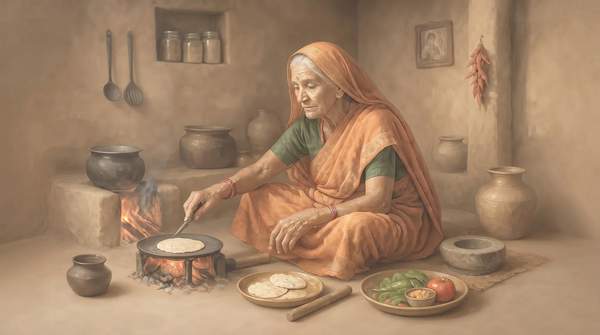
A chulha is a traditional clay stove long used in rural India, particularly where modern cooking appliances are not readily available. It is a simple but effective device that burns natural fuels—wood, cow dung, or coal—according to the food and wellness brand Zama, which describes it as part of Indian households for centuries and deeply rooted in the cultural and culinary traditions of rural communities.
The Times of India places the timeline in sharper relief: roughly three decades ago, many Indian homes still cooked on a chulha built from clay, husk, and water, before the "one-touch" cooking range supported by a chimney replaced it. The outlet's point is not simply nostalgia—it notes that the shift away from the chulha is often assumed to be about health, and frames its own coverage as an argument for the stove's "bright side." Zama, meanwhile, emphasizes the communal dimension: traditional Indian meals cooked this way are shared and celebrated, making each bite part of a broader cultural experience rather than a purely technical one.
The Mechanics of Flavor: How Chulha Heat Transforms Food
The chulha's signature results come from its heat profile. Zama describes natural fuels as producing slow, consistent heat rather than the rapid, high-temperature burst of a gas flame. That evenness matters: food cooks gradually, and the burning wood or cow dung imparts a distinctive earthy, smoky character that the source calls highly valued in Indian cooking. This is not an incidental by-product but the central reason cooks reach for the method.
The comparison is sharpest in ghee-making, a domain where the heating source changes the final product. Writing for Nyal Naturals, Jayesh Borada explains that traditional Bilona ghee—made from curd-churned A2 milk—reaches its defining step when the churned butter is slowly heated, and that this is precisely where the choice of heat source "makes all the difference." His assessment of the gas stove is blunt on this dimension: it "lacks the earthy flavor profile associated with chulha ghee."
The trade-off runs in both directions. Borada notes that a gas flame is ready the instant you turn a knob, offering control and repeatability that small-batch urban producers depend on. The chulha, by contrast, is time- and labor-intensive: fuel must be gathered, and heat must be monitored by hand, and without skill a batch can be spoiled by overheating or underheating. Skill, in other words, is not optional—it is the mechanism by which the chulha's advantages are realized.
Beyond Taste: Nutritional Advantages of Slow Cooking
The nutritional argument for the chulha rests on the same slow, low, steady heat that produces its flavor. Zama's frequently asked questions section states directly that chulha cooking is healthier in the sense that it "retains the nutrients in food due to slower cooking," with natural fuel as the heat source. Borada extends this logic to ghee specifically: the chulha's gradual heat prevents the kind of high-temperature degradation that can damage delicate nutrients.
He is equally explicit about the gas stove's weakness on this measure, writing that rapid high heat "may destroy some delicate nutrients and antioxidants." Two qualifications belong here. First, this claim is an attributed general principle about cooking methods, not the result of a formal nutritional study comparing chulha and gas-stove food. Second, Borada adds a counterpoint of his own: gas stoves emit less indoor smoke, which is healthier in enclosed kitchens—an acknowledgment that the nutrition question does not exhaust the health comparison.
Read together, the two sources make a consistent claim: slow, consistent heat preserves what rapid high heat can degrade, and the chulha's fuel—wood or dry cow dung—contributes compounds that carry through to the final dish.
Chulha vs. Gas Stove: A Comparative Look at Culinary Trade-offs
Pulling these threads together, the two methods can be compared side by side across the dimensions that actually determine which to use.
| Dimension | Traditional Chulha | Modern Gas Stove |
|---|---|---|
| Heat Source & Control | Wood, cow dung cakes, or coal; slow and consistent heat, but control is less precise and requires skill to manage | LPG fuel; instant, adjustable flame at the turn of a knob |
| Flavor & Aroma Profile | Distinctive earthy, smoky flavor from burning natural fuels, highly valued in Indian cooking | Neutral profile; lacks the earthy notes associated with chulha cooking |
| Nutrient Retention | Slow cooking preserves nutrients, including in ghee, by avoiding high-temperature degradation | Rapid high heat may destroy some delicate nutrients and antioxidants |
| Convenience & Labor | Time- and labor-intensive; fuel must be gathered and heat monitored continuously | Quick, one-touch operation suited to fast-paced modern routines |
| Health & Safety (Indoor Use) | High smoke and incomplete fuel combustion; indoor use without ventilation can cause respiratory problems | Emits less indoor smoke, healthier in enclosed kitchens |
The smoke problem deserves its own weight. A study published in the Civil Engineering & Environmental Journal on enhancing the thermal efficiency of the traditional chulha lists its disadvantages bluntly: high smoke, incomplete fuel combustion, a low combustion rate, and poor utilization of the heat the fuel produces. The same paper notes these drawbacks bear most heavily on indoor cooks, and its remedy is technical—a modified chulha design with air-supply holes that achieves more complete combustion, less smoke, and higher thermal efficiency at a cost of Rs. 385. The device, in other words, is not fixed in its traditional form; engineering can address its worst liability while preserving its heat character.
The comparison also explains why the method is finding its way into contemporary fine dining rather than disappearing. A restaurant that cooks every dish on a wood-fired chulha is selling exactly what the table above shows cannot be replicated on gas: the smoky, earthy depth that comes from natural fuel and patient heat. What such a kitchen takes on, in exchange, is the labor and fuel management that home cooks abandoned decades ago.
Embracing Tradition: When to Choose the Chulha
Readers seeking unique earthy and smoky flavors, enhanced nutrient retention through slow cooking, and a connection to culinary heritage should consider the chulha, acknowledging its demands for time and proper ventilation. The honest summary is that neither stove wins outright: the chulha is superior on flavor and gentle heat, the gas stove on speed, control, and indoor air quality, and the modified-chulha research suggests the smoke problem is an engineering issue rather than a permanent disqualification.
The practical test is simple. A reader should be able to articulate the specific flavor and nutritional benefits of chulha cooking—slow, even heat from natural fuel, with reduced high-temperature nutrient degradation—and state its trade-offs against a modern gas stove: manual labor, longer cooking times, and indoor smoke risk without ventilation. Anyone who can make that case in their own words, and decide which priority a given dish serves, has understood the choice fully.
Sources
- From Tandoor to Chulha: Secrets of Traditional Indian Cooking — Zama
- 5 benefits of cooking food on a mud chulha (clay stove) — The Times of India
- Ghee Made on Gas Stove vs Desi Chulha: A Deep Dive into Tradition, Tas — Nyalnaturals.com
- Enhancement of Thermal Efficiency of Traditional Indian Cooking Furnace (Chulha) — Cwejournal