When you unwrap a craft chocolate bar and taste fruit, nuts, or earth, you are tasting a chain of deliberate decisions that began long before that bar was moulded. Bean-to-bar makers—the small producers who buy cacao and process it themselves—treat each stage, from fermentation to roasting, as a chance to shape flavor. And no stage matters more than roasting: how dark a maker roasts the beans is one of the clearest signals of what the finished bar will taste like. Understanding that one variable can change how you shop for chocolate.
Roasting: The Crucial Stage for Flavor Development
Fresh cacao seeds bear little resemblance to what we recognize as chocolate. The pleasant chocolate aroma, as Cargill's account of cacao processing notes, is not at all apparent in the fresh seed. The seed instead contains cocoa butter, proteins, starch, alkaloids, essential oils and various other substances that release their aroma only when heat is applied at the roasting stage.
Roasting is where the transformation happens. Amano Artisan Chocolate, a Utah-based bean-to-bar maker, describes it as the stage that turns fermented and dried cacao beans into the foundation of fine chocolate—much like roasting coffee, the process releases aroma, deepens flavor, and builds complexity. But in chocolate, Amano cautions, the margin for error is smaller than in coffee.
That precision is why artisan makers roast in small quantities, maintaining control over time and temperature for each batch. This attention, Amano explains, lets a maker highlight the unique flavor profile of every origin rather than flattening the differences between them. Where industrial producers roast for consistency and scale, craft producers roast to reveal what a particular harvest of beans already has to offer—and what heat can coax out of it.
Mastering the Roast: Light vs. Deep Profiles
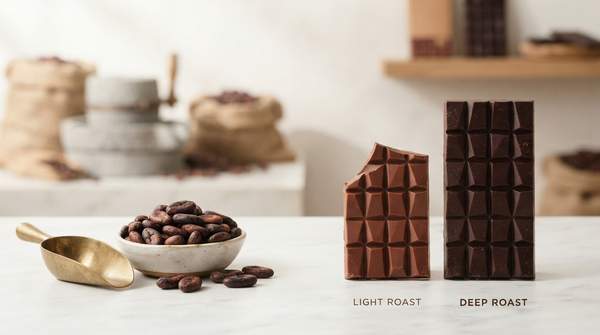
The central choice in roasting is intensity, and craft makers make it bean by bean. Some beans, according to Amano, respond best to a light roast that preserves their fruity brightness. Others require a deeper roast to unlock warm, nutty undertones or bold, earthy richness. Neither approach is better; they are different tools for different raw materials.
Deeper roasting does more than darken the bean. It reduces moisture and transforms the seed's precursor compounds into new aromatic and flavorful substances—richer, warmer notes that were simply not present in the fresh seed, per Cargill's description of the chemistry at work. A light roast, by contrast, takes a more restrained hand: preserve what fermentation built, and heat the bean just enough to make it workable without cooking away its delicate character.
What distinguishes artisan practice from industrial production is this tailoring itself. Industrial chocolate producers, Amano notes, use a uniform roast to simplify production across vast quantities of blended beans. Artisans instead craft roast profiles for each specific bean, a customization the company credits with bringing out the subtle, layered notes that define craft chocolate and ensuring no origin tastes like another. Coffee drinkers will recognize the logic: roasters there likewise adjust approach based on a bean's altitude, density and origin.
Two caveats keep this model honest. First, specific flavor notes for any given light roast will vary with the origin and varietal of the cacao bean—light roasting preserves fruitiness, but which fruits depends on the bean itself. Second, the intensity and specific notes of a deeper roast are influenced by the duration and temperature of that roast, not just its label.