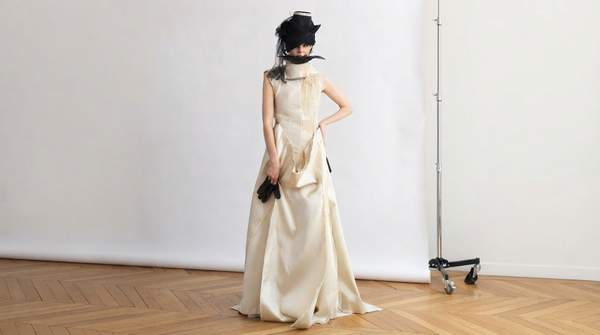
Mounting a single dress on a mannequin for a high-end fashion exhibition can take several hours—a hidden ballet of precision the public rarely sees. Each garment, often a delicate artifact, demands a bespoke display. Museums custom-fit every mannequin, padding it to ensure fabric integrity and silhouette accuracy, as detailed by the Cincinnati Art Museum. This meticulous, unseen labor is the bedrock of a flawless exhibition.
High-end fashion exhibitions are celebrated for their artistic brilliance, yet their flawless presentation hinges on meticulous, often unglamorous, physical and technical labor. Creating a captivating visual narrative demands countless hours of detailed work, from conservation to precise placement, extending far beyond the initial artistic concept.
Future appreciation of fashion exhibitions will increasingly acknowledge the intricate craft of their physical realization as integral to their artistic merit. This elevates the exhibition into a distinct art form, challenging perceptions that these displays are solely conceptual, overlooking the skilled labor and technical challenges.
The Vision Behind the Veil: Crafting a Designer's Narrative
Alexandre Herchcovitch's career retrospective, featuring over forty looks from latex pieces to a 1993 polyamide jumpsuit, showcases a designer's entire artistic journey, according to Newcity Brazil. Such extensive exhibitions often encompass over 100 items of clothing and archival documents, as reported by NYU News, underscoring their immense scale. This meticulous, often invisible labor of exhibition design transforms a designer's vision from passive display into an active, sculptural re-creation.
The Unseen Choreography: From Silhouette to Shot
Achieving the correct historical silhouette is paramount. A dress's intended shape dictates its display, often requiring specific underpinnings like a hoop petticoat for an 1850s gown or padding for an 1880s bustle, as detailed by the Cincinnati Art Museum. This precise sculpting faithfully represents the garment’s original form and drape.