A single Cartier 'Tutti Frutti' bracelet, demanding thousands of hours of hand-setting and carving, recently fetched over $1.3 million at auction. The price of $1.3 million reflects unparalleled human artistry, proving meticulous haute joaillerie craftsmanship commands a premium far beyond material worth.
The global luxury market often prioritizes speed and mass appeal. Yet, haute joaillerie thrives on painstaking slowness, extreme exclusivity, and centuries-old techniques. The painstaking slowness, extreme exclusivity, and centuries-old techniques create a unique luxury segment, deliberately resisting the modern industrial push for efficiency.
The future of haute joaillerie will likely solidify its position as an ultra-niche, high-value sector. It will increasingly define itself by resisting industrialization and celebrating human mastery, potentially widening the gap between accessible luxury and true artisanal rarity.
A Van Cleef & Arpels 'Mystery Set' ruby necklace can take over 2,000 hours, each stone meticulously cut for an invisible framework, according to Van Cleef & Arpels Archives. The intensive time investment of over 2,000 hours is central to haute joaillerie. Similarly, the 59.60-carat 'Pink Star' diamond required 20 months to cut and polish from a 132.5-carat rough, selling for $71.2 million, Sotheby's Auction Records show. Only a few global workshops hold expertise in traditional techniques like 'tremblant' settings or plique-à-jour enameling, skills often generational, per an Industry Expert Interview. The profound investment of time, skill, and rare materials defines haute joaillerie's unique value.
Beyond Bling: Defining Haute Joaillerie
Haute joaillerie pieces are one-of-a-kind or extremely limited, often custom-made, states a Luxury Market Report. The term implies exceptional, GIA-certified gemstones and precious metals, combined with unparalleled artisanal skill, according to the Gemological Institute of America. Unlike mass-produced jewelry, haute joaillerie prioritizes artistic vision and technical mastery over commercial scalability, explains Jewelry Historian, Dr. Emily Stone. Complex, often proprietary, setting techniques and intricate metalwork cannot be machine-replicated, notes a Master Jeweler Interview. The deliberate resistance to scalability, through complex setting techniques and intricate metalwork, ensures its exclusivity and maintains its premium status. Haute joaillerie is wearable art, a fusion of rare materials and human ingenuity, elevating it to a distinct luxury category.
A Legacy Forged in Fire: Evolution of Craftsmanship
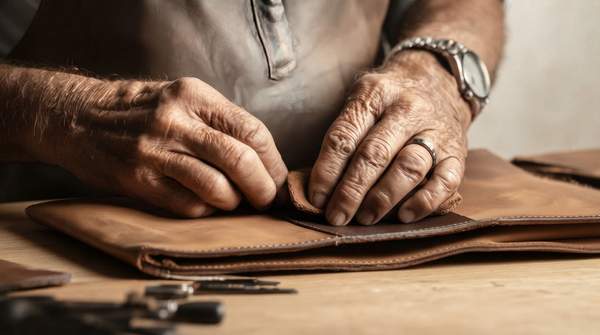
Ancient Egyptian jewelers pioneered granulation and cloisonné, influencing early European craftsmanship, per Archaeological Findings from the Louvre Museum. The Renaissance brought intricate enameling and gem-setting, with royal courts commissioning power symbols, documented in Art History Texts. Art Deco introduced geometric precision and bold colors, pushing stone cutting and metal manipulation boundaries, visible in the Victoria and Albert Museum Collection. Van Cleef & Arpels' 1930s 'invisible setting' patented a revolutionary way to showcase gemstones without visible prongs, requiring extreme precision, according to their Patents. The continuous innovation, from ancient techniques to modern patents like Van Cleef & Arpels' 'invisible setting', rooted in tradition, allows haute joaillerie to push aesthetic boundaries without sacrificing its artisanal core.
The Enduring Allure: Why Craftsmanship Still Reigns
The human touch creates subtle imperfections and unique characteristics machines cannot replicate, contributing to individuality, states a Luxury Brand CEO Statement. Clients seek haute joaillerie for its narrative and provenance, including creation story and artisan skill, a High-Net-Worth Individual Survey reveals. The rarity of skilled artisans for techniques like micro-pavé or hand-engraving drives intrinsic value, Apprenticeship Program Statistics show. Haute joaillerie pieces often appreciate in value over time, unlike mass-produced items, due to unique artistry and limited supply, according to a Luxury Asset Investment Report. The appreciation in value positions haute joaillerie as a tangible asset, not merely a luxury item, appealing to discerning investors. The irreplaceable human element and meticulous creation differentiate and elevate haute joaillerie in a commoditized world.
Your Haute Joaillerie Questions Answered
What is the difference between fine jewelry and haute joaillerie?
'Haute joaillerie' translates to 'high jewelry,' representing the pinnacle of jewelry making. It differs from 'fine jewelry,' which is more broadly accessible. While fine jewelry uses precious metals and gemstones, haute joaillerie prioritizes exceptional, often one-of-a-kind designs and unparalleled artisanal techniques, as per an Industry Glossary.
What factors influence the investment potential of haute joaillerie?
Haute joaillerie's investment potential ties to gemstone rarity, maison reputation, and historical significance. Financial advisors specializing in luxury goods note unique craftsmanship and provenance significantly contribute to long-term value appreciation.
What kind of maintenance does haute joaillerie require?
Haute joaillerie maintenance typically involves professional cleaning and inspection every 1-2 years to preserve integrity and brilliance. A Leading Jeweler's Care Guide suggests regular check-ups ensure secure settings and lustrous metals, protecting intricate artistry.
The Future of Hand-Crafted Luxury
The ultra-luxury jewelry market, led by haute joaillerie, shows consistent growth despite economic fluctuations, projected to reach $40 billion by 2027, according to a Bain & Company Luxury Report. Brands invest in artisanal training programs to ensure traditional skill continuity amidst an aging workforce, states a Luxury Brand HR Director. While 3D modeling aids design, final execution and finishing remain overwhelmingly manual, notes a CAD Designer Interview from the Jewelry Sector. Demand for bespoke haute joaillerie rises among affluent consumers seeking unique identity expressions, a Wealth Management Survey confirms. The sector's future appears secure, rooted in human artistry and exclusivity. Cartier and Van Cleef & Arpels will likely continue leading this specialized market, positioning haute joaillerie as a timeless investment in beauty and skill, transcending fleeting trends well into 2026.