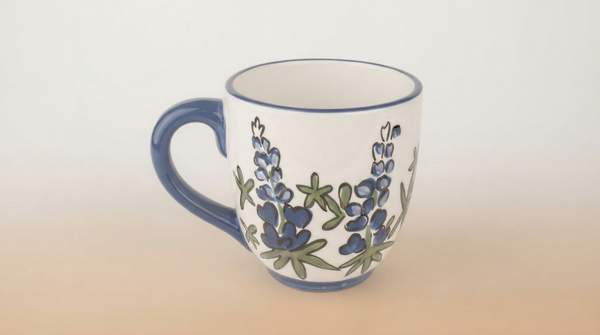
Hand-painted porcelain announces itself in small imperfections. Where mass-produced transferware applies a printed design mechanically and uniformly, a piece decorated by an individual artist carries subtle variations in color depth, shading, and pattern—evidence that no two pieces are exactly alike. This guide connects those visual cues to the three historical traditions that produced most hand-painted porcelain collectors encounter today: Chinese export wares from Jingdezhen, the European factories patronized by aristocrats, and the American china-painting movement of the late nineteenth and early twentieth centuries. It is a guide to looking, not to pricing: a confident preliminary judgment about how a piece was decorated is not the same as a professional appraisal.
Historical Roots: From Chinese Export to European Courts
Hand-painted porcelain was a global trade long before it was a hobby. The center of production was Jingdezhen, the Chinese porcelain capital whose scale astonished European visitors. The Jesuit missionary François Xavier d'Entrecolles described the city in 1712: "During a night entrance, one thinks that the whole city is on fire, or that it is one large furnace with many vent holes." His account conveys the industrial intensity of a town devoted entirely to porcelain, where decoration was already a specialized manual craft practiced by generations of painters.
As European demand grew, the trade reshaped the decoration itself. European traders began supplying models to Jingdezhen manufacturers, showing the forms and decorative schemes they wanted for tableware items unfamiliar to Chinese makers. The exchange ran deeper than shapes: French Jesuits provided paintings, engravers, enamels, and even painters to the Imperial court, and those European designs found their way into porcelain decoration. According to the encyclopedic history of china painting, colorful enamel paints of the kind used in German tin-glazed pottery gave rise to new techniques, including the famille rose palette that transformed Chinese export porcelain. The result was a hybrid style—Chinese craftsmanship executing motifs shaped by Western taste—much of it painted by hand for export.
European patrons then brought production home. Royal and aristocratic patronage financed factories such as Sèvres, where porcelain decoration became a courtly art form governed by exacting standards and heavily decorated dinner services. This tradition matters to anyone holding an older piece today: the aristocratic era established the expectation that a painted plate or tureen could be an artwork rather than a utensil, and its workshop conventions—signed or marked pieces, elaborate gilding, layered enamels—remain reference points for what "fine" painted porcelain looks like.
The American Women's Art Movement and China Painting
The third tradition emerged far from the kilns of Jingdezhen and Sèvres, in American parlors and studios. By the turn of the twentieth century, as the antiques trade publication Journal of Antiques recounts, painting on porcelain had become a cottage industry for more than 25,000 talented artists in America—most of them women who were not permitted to achieve professional status in that era. Blocked from formally recognized artistic careers, they built one of the country's largest decorative-arts enterprises out of hand-painted blanks.
The movement created its own institutions. Adelaide Alsop Robineau, writing in the Journal of Antiques' account, made history when in 1899, together with her husband Samuel, she published Keramic Studio, the first monthly magazine devoted to china painting. The magazine spread techniques, design sources, and a sense of shared purpose among thousands of practitioners, many of whom signed their work or marked it in ways that survive on pieces collectors handle today.
The material legacy is specific and recognizable. Many American painters worked on imported Limoges blanks—undecorated French porcelain they decorated themselves—and thousands of unknown artists are responsible for the hand-painted Limoges pieces collectors proudly display today, as the Journal of Antiques notes. Each piece is as unique as the individual who painted it. For a reader examining a vase or plate from this era, that biography matters as much as the brushwork: a Limoges blank painted by an American amateur is neither a French factory production nor a Chinese export ware, and its stylistic quirks often reflect a self-taught hand following magazine designs rather than a workshop tradition.
Decision Framework: Identifying Hand-Painted Porcelain
The framework below lets a non-expert systematically compare a piece against the visual characteristics of manual artistry versus mechanical reproduction. Examine the piece in good light, ideally with a magnifier, and evaluate it criterion by criterion before forming a judgment.
| Characteristic | Hand-Painted Porcelain | Mass-Produced / Transferware | What to Look For |
|---|---|---|---|
| Color and shading variation | Natural color depth, layering, and subtle shading differences, even within repeating elements | Uniform printed coloration across a motif or a full set | Compare the same flower or border element in two places; look for pigment pooling, layering, and tonal shifts |
| Design asymmetry and uniqueness | Slight asymmetries and unique details between repeating motifs; no two pieces exactly alike due to the manual process | Identical repetition of motifs and near-identical pieces within a set | Place two matching plates side by side, or inspect a repeated border—hand-painted versions will drift subtly |
Two cautions govern the assessment. First, variations in pattern, color, glaze, and even size can also arise from hand-thrown, foot-stomped production methods used in cottage studios in China, as the tableware maker Half Past Seven describes of its own blue-and-white wares. Those variations are marks of individual craftsmanship, not defects—and their presence signals a manual process without pinpointing who painted it. Second, the same source stresses that no two pieces from such studios are alike; if a "hand-painted" set is perfectly consistent piece to piece, that uniformity points toward mechanical decoration. The framework yields a preliminary judgment about origin, not authentication.
Making Your Own Assessment: Appreciating the Craft
Readers can confidently apply visual inspection techniques to assess if a porcelain piece is hand-painted, enhancing their appreciation for its craftsmanship and historical context. Work through the matrix above, remember which tradition the piece likely belongs to—Chinese export with its famille rose enamels, a European factory ware, or an American-painted Limoges blank—and let the history sharpen what your eye already notices.
The measurable indicator of a hand-painted piece is the presence of irregular brushstrokes, color variations, and unique artistic details upon close examination of a porcelain object. When you find them—shading that shifts between twin blossoms, a border that wanders, pigment layered unevenly—you are seeing a decision a person made with a brush, whether a Jingdezhen master, a Sèvres workshop painter, or one of the thousands of women whose names history never recorded. That judgment, grounded in what the object itself shows you, is the reward of looking closely.
Sources
- China painting - Wikipedia — EN
- Journalofantiques
- The History Series: Blue & White Porcelain — Half Past Seven