Molecular gastronomy is the culinary practice of putting chemistry and physics to work at the stove, and its defining promise is control: by leveraging phenomena such as ionic cross-linking, protein denaturation, emulsification, and the Maillard reaction, cooks can shape texture, flavor, and aroma with predictability. Writers on the field distinguish it from food science, which deals with industrial and mass food production; molecular gastronomy instead pursues culinary understanding and experimentation in restaurants and homes. Its most iconic technique, spherification, shows the approach at its most vivid, turning liquids into caviar-like pearls through a precisely managed chemical reaction.
Spherification: Transforming Liquids into Pearls
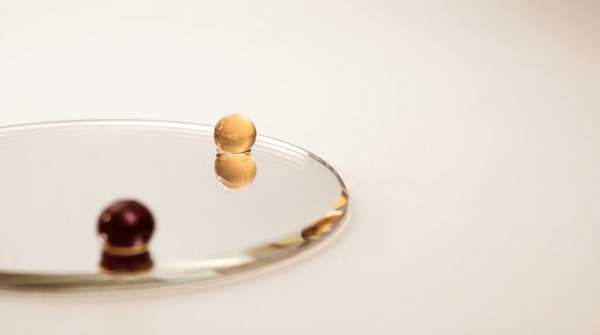
Spherification creates small spheres with liquid centers enclosed in thin, gel-like membranes, the "caviar-like pearls" that a primer from the Auguste Escoffier School of Culinary Arts cites as a signature achievement of the style. The technique can be applied to a range of flavorful liquids, and it comes in two variants, direct and reverse spherification, that differ in how the gelling agents are deployed. What unites them is a single underlying reaction, and understanding that reaction is what separates a cook who can reproduce the effect from one who can only follow a recipe.
The ingredient list is short. Sodium alginate serves as the primary gelling agent for ionic cross-linking. Calcium comes from one of two salts: calcium chloride for direct spherification, chosen when its flavor impact on the finished dish is acceptable, or calcium lactate for reverse spherification. A third gelling agent, agar-agar, belongs to the related technique of gelification, where it produces firm, heat-stable gels rather than liquid-centered spheres.
The Science of Spherification: A Culinary Transformation
The whole transformation rests on one reaction: ionic cross-linking. The framework below maps each ingredient to its role in that reaction and traces the path from flavored liquid to finished pearl.
| Dimension | What happens |
|---|---|
| Technique | A flavorful liquid is formed into small spheres with liquid centers and thin, gel-like membranes, the "caviar-like" pearls of fine-dining presentation. |
| Key ingredients | Sodium alginate dispersed in the liquid; a calcium source, calcium chloride for direct spherification when its flavor impact is acceptable, or calcium lactate for reverse spherification. |
| Scientific principle | Divalent calcium ions bridge alginate chains, cross-linking them into a calcium alginate gel at the liquid's surface. |
| Culinary outcome | An edible sphere with a liquid interior, delivering a burst of flavor and a deliberate contrast between delicate skin and liquid core. |
The reaction builds the membrane from the outside in, which is exactly why the center stays liquid:
- The cook disperses sodium alginate into the flavored liquid, giving it a supply of long alginate chains.
- That liquid is introduced to a calcium solution, so divalent calcium ions meet the alginate chains at the surface.
- Each calcium ion bridges neighboring alginate chains, the process of ionic cross-linking, knitting them into a calcium alginate gel wherever the two meet.
- Because the ions act at the surface and penetrate inward, gelling proceeds outside-in: a membrane forms and thickens while the interior remains liquid.
- Exposure time ends when the sphere is separated from the bath, and the cook can tune membrane thickness in advance by adjusting ion concentration and exposure time.
That last variable is where craft enters. Guidance aimed at serious home and professional cooks notes that understanding stabilization helps you plan service timing and plating strategy, and shows how professional kitchens apply these principles consistently. A pearl is a timed object: its membrane depends on how long the reaction ran and how concentrated the calcium bath was, so the cook who understands the chemistry can decide, in advance, whether the sphere should be delicate enough to burst on the tongue or sturdy enough to hold through plating.
The choice of calcium salt makes the same point from another angle. The recommendation to pick calcium lactate for reverse spherification, and calcium chloride for direct spherification only when the flavor impact is acceptable, shows that ingredient chemistry and taste cannot be separated: the agent that drives the reaction is also something the diner may perceive.
Beyond the Pearl: A Toolkit of Phenomena and a Sensory Ambition
Spherification is one lever among several. The same body of culinary guidance lists protein denaturation, emulsification, and the Maillard reaction alongside ionic cross-linking as the chemical and physical phenomena molecular gastronomy leverages so cooks can shape texture, flavor, and aroma with predictability. These are not exotic processes invented for tasting menus; they are the ordinary physics and chemistry of cooking, but applied deliberately, with measured variables, rather than left to habit. Gelification extends the same logic in another direction, using agar-agar to build firm, heat-stable gels where spherification builds thin, liquid-centered membranes.
The purpose of all this control is sensory. The Escoffier School's primer describes the modern blending of food and performance as creating "an immersive, multi-sensory dining experience" that "challenges the way we think about food." A pearl of fruit juice that looks like caviar but explodes as liquid rearranges expectations of appearance, texture, and flavor in a single bite, which is precisely the effect the technique is engineered to produce.
That same primer adds a caution that keeps the science in perspective: technique is downstream of taste. "If you don't understand flavor profiles and dish composition, how will you ensure that it actually tastes good?" its authors ask. The chemistry of a calcium alginate membrane guarantees a texture, not a delicious dish; the reaction is a tool that still has to be governed by ordinary culinary judgment.
Mastering Culinary Transformation Through Science
The through-line of the discipline is a decision: chefs can intentionally manipulate food's texture and appearance by understanding and applying specific chemical and physical principles. Spherification demonstrates the full pattern, identify a phenomenon (divalent calcium ions bridging alginate chains), control its variables (ion concentration, exposure time, the choice of calcium salt), and convert a pourable liquid into a stable sphere with a liquid core. Other techniques follow the same logic with different phenomena, from protein denaturation to the Maillard reaction.
For cooks and diners alike, the principle has a concrete test. As the guidance on these techniques frames it, "The successful creation of dishes with novel textures, such as stable liquid-centered spheres or light foams, indicates the effective application of molecular gastronomy principles." Watch a plated pearl: if the membrane holds until the spoon breaks it and the liquid center releases on the palate, the chemistry has done exactly what it was designed to do.