Design

The Calculated Space: AI's Measured Influence on Interior Design's Future

AI is profoundly reshaping interior design, moving from a speculative tool to a subject of formal market analysis. This shift signals a significant evolution in aesthetics and process.

LB
Luca Bianchi

April 3, 2026 · 7 min read

A designer uses AI to generate photorealistic interior designs, showcasing the future of digital aesthetics and innovative design processes in a modern studio.

An empty room waits, a blank canvas of white walls and pale wood floors. A decade ago, its transformation would have begun with sketches, swatches, and physical mood boards. Today, the process might start with a query. A prompt is entered—"a minimalist living room in the style of Japandi, with oak furniture, muted green accents, and afternoon light"—and within moments, the empty space is filled on-screen with a photorealistic rendering. This is more than a technological novelty; it is a signal of a profound shift. The question of how AI is reshaping interior design aesthetics and process is now a subject of formal market analysis, indicating a move from the fringe to the financial forecast. The object, in this case, is the design process itself, and data is beginning to speak for it.

The core trend is the codification of artificial intelligence in interior design as a measurable and growing economic sector. What was once a speculative tool for digital-native designers is now the subject of detailed market reports, with analysts projecting a tangible growth trajectory. This transition from abstract concept to tracked commodity suggests that AI's role is becoming foundational, influencing not just visual outputs but the very business of creating spaces. The industry is moving beyond asking "what if" and has begun to calculate "how much" and "by when," a clear indicator of technological maturation and commercial integration.

How AI Influences Aesthetic Decisions in Interior Design

The most concrete evidence of this shift lies not in a single design or software, but in the emergence of dedicated market analysis. The AI interior design market is being formally tracked, a development that signals its arrival as a distinct industry category. This scrutiny provides a data-driven lens through which to view its evolution. Projections for this market's growth are now being established, offering a timeline for its integration into the mainstream. According to a report by snsinsider.com, the market's size, share, and growth have been detailed in a forecast that extends to the year 2032. This long-range view suggests that industry stakeholders anticipate a sustained period of development and adoption.

Further analysis reinforces this perspective, offering a nearer-term snapshot. A separate market report, detailed by thebusinessresearchcompany.com, provides projections for the artificial intelligence in interior design market for 2026. The existence of multiple, independent analyses points to a consensus that this is a sector worthy of financial and strategic consideration. The data itself, while proprietary to the reporting firms, is less important than the act of its collection. It confirms that capital, both financial and intellectual, is flowing into this space. The conversation has evolved from the creative potential of a few algorithms to the economic potential of an entire ecosystem of tools, platforms, and services.
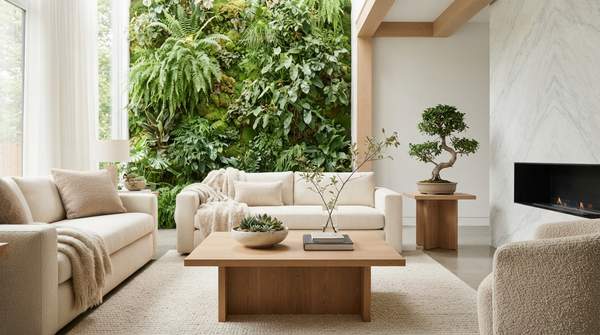
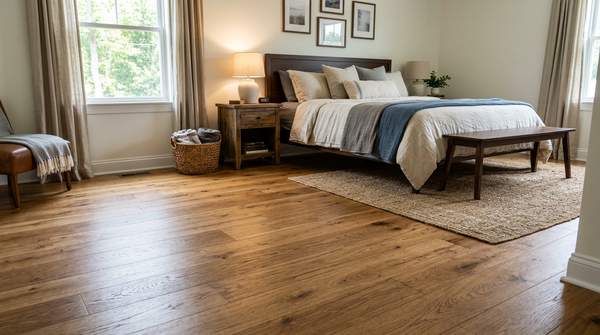
This quantification has a subtle but significant impact on aesthetic choices. AI tools operate on data—vast libraries of images, styles, furniture models, and material textures. They learn to identify patterns and correlations that define a particular aesthetic, be it Bauhaus minimalism or maximalist grandeur. When a user requests a "serene coastal living room," the AI does not invent from a vacuum. It synthesizes its knowledge from thousands of existing examples, identifying the common denominators of that style: light woods, blue and white palettes, natural fibers, and uncluttered layouts. The result is an output that is often aesthetically coherent and aligned with established trends. It is design by data aggregation, a process that excels at replication and recombination but presents new questions about originality and the evolution of style itself.

Streamlining Design Workflows with Artificial Intelligence

The projected market growth is rooted in tangible efficiencies. At its core, artificial intelligence is a tool of acceleration, and its application in the design workflow addresses long-standing procedural bottlenecks. The traditional design process is linear and labor-intensive, involving stages of conceptualization, drafting, sourcing, and rendering that can span weeks or months. AI-driven platforms compress this timeline dramatically. Generative AI can produce dozens of layout options for a single room in the time it would take a designer to produce one or two manual sketches. This rapid ideation allows for a more fluid and exploratory initial phase, where clients can visualize a wider range of possibilities without incurring significant time and cost.

This efficiency extends beyond simple floor plans. AI algorithms can automate the creation of 2D and 3D models, generate realistic renderings, and even produce detailed construction documents. By handling these technically demanding but creatively repetitive tasks, the technology frees the human designer to focus on higher-level strategic thinking. The focus shifts from the mechanics of drawing to the art of curation. The designer's expertise is applied to refining the AI's output, selecting the most promising options, and layering in the nuanced details that elevate a competent layout into a compelling space. The tool becomes a partner in production, not a replacement for creativity.

Furthermore, AI introduces a level of data analysis previously unavailable to most designers. An algorithm can cross-reference a client's budget with a real-time inventory of thousands of suppliers to generate a complete, shoppable list of furnishings for a proposed design. It can optimize a lighting plan for energy efficiency based on a room's orientation and local climate data. It can ensure that all specified materials meet certain sustainability or accessibility standards. This integration of data-driven constraints into the creative process represents a significant evolution. Form still follows function, but that function is now informed by a vast and dynamic dataset, making the final design not only more beautiful but also more intelligent and practical.

The Role of AI in Data-Driven Interior Design Personalization

The impact of this technological shift is felt most acutely by the profession's key participants: the designer and the client. For interior designers, the rise of AI necessitates a re-evaluation of their role. As routine tasks become automated, the value of a designer's work becomes increasingly concentrated in their uniquely human skills. This sentiment is explored in discussions about the balance between technology and human-centric design, such as one piece from dmagazine.com, which touches upon the importance of the human element in an age of automation. The designer is no longer just a creator of plans but a strategist, a psychologist, and a storyteller.

Their role is to translate a client's unarticulated needs and lifestyle into a coherent design brief that can effectively guide the AI. They are the curators who sift through the algorithm's prolific output to find the one option that truly resonates. Most importantly, they provide the narrative that connects a collection of objects and finishes into a meaningful whole—a home. The AI can generate a room that is stylistically correct, but the human designer can craft a space that feels personal and resonant. In this new paradigm, form follows function, but feeling is equally important, and that feeling is an exclusively human domain.

For the client, the experience of interior design becomes more transparent, collaborative, and immediate. The "big reveal" at the end of a long design process is replaced by a series of interactive sessions where they can see their choices rendered in real time. This ability to visualize the end result with high fidelity from the very beginning demystifies the process and empowers clients to make more confident decisions. It reduces the risk of miscommunication and costly late-stage changes. The technology fosters a more dynamic partnership between designer and client, where the client's input can be instantly integrated and explored. This enhanced experience is a significant driver of adoption and a key factor behind the positive market forecasts.

Future Outlook: AI's Long-Term Impact on Interior Design

Market projections to 2026 and 2032 indicate AI will become a standard component of the interior design toolkit, moving beyond novelty to deeper integration. Future AI tools will evolve past static renderings, creating fully immersive, interactive virtual reality experiences. Clients will "walk" through proposed homes, opening doors, switching lights, and experiencing acoustic changes room-to-room, making the design process more intuitive and emotionally engaging.

We can also anticipate the rise of hyper-personalization. Future AI may be able to analyze a client's broader lifestyle data—from their fashion choices to their travel destinations—to develop a design profile that anticipates their aesthetic preferences before they are even articulated. This could lead to spaces that are not just customized but truly predictive of a user's needs and desires. The home could become a responsive environment, with AI-driven systems that adjust lighting, temperature, and even wall art in response to the occupants' mood or the time of day, creating a seamless blend of architecture and ambient computing.

However, as the technology's capabilities expand, so too will the importance of the designer's ethical and creative stewardship. The risk of AI-driven design is a trend toward homogeneity, where algorithms trained on the same vast datasets produce increasingly similar results. The future role of the exceptional designer will be to push against these algorithmic tendencies—to introduce unexpected elements, to champion local artisans over mass-produced goods, and to ground their designs in a strong, personal point of view. The most sought-after designers will be those who can harness the power of AI for efficiency and exploration while infusing their work with the inimitable signature of human insight, empathy, and artistry. The future is not one of machine versus human, but of the designer as the expert conductor of an increasingly powerful technological orchestra.

Key Takeaways

  • Formal market analysis projects growth for AI in interior design to 2026 and 2032, establishing it as a recognized industry sector.
  • AI transforms design workflows by automating technical tasks like rendering and modeling, enabling designers to focus on creative strategy, curation, and client relations.
  • Human designers' value shifts to irreplaceable skills: empathy, storytelling, and translating client lifestyles into emotionally resonant spaces.
  • Future developments anticipate deeper VR integration for immersive experiences and hyper-personalization, necessitating human oversight to prevent aesthetic uniformity.