Sarah Flint once ordered only 30 units of a $1,000 shoe, which promptly sold out at a $1,500 price point, demonstrating intense demand for truly limited, handcrafted luxury accessories. The immediate sell-out highlights the potent market power of extreme scarcity when coupled with visible artisanal effort. Each pair of these meticulously crafted shoes can require up to 100 hours of labor, with production costs for materials and craftsmanship exceeding $1,000, according to Glossy. The level of investment in human skill and time inherently limits output, making each unit a testament to specialized production.
The operational scale for brands emphasizing this level of craft is constrained by its very nature. Factories and artisan partners producing for Sarah Flint collectively produce just 150-200 pairs of shoes daily, a figure that starkly contrasts with mass-market production volumes. Limited output is not a limitation in the luxury segment but rather a deliberate feature, fostering an aura of exclusivity that drives disproportionate demand and premium pricing, redefining traditional business models focused on maximizing volume.
Luxury brands increasingly emphasize artisanal craftsmanship, but the economic model of slow, labor-intensive production often conflicts with the demands of modern market scale and profitability. The inherent tension creates a strategic challenge: how to leverage the value of unique craft without succumbing to the pressures for greater efficiency and broader distribution. The market's willingness to pay a 50% premium for such items suggests a powerful resolution to this conflict.
Luxury brands are likely to continue investing in and showcasing traditional artisan techniques, not just for brand storytelling, but as a core business strategy to maintain exclusivity and justify premium pricing in an increasingly commoditized market, while also facing growing pressure for ethical sourcing. Strategic deployment solidifies their position at the apex of the consumer goods sector, ensuring enduring appeal for discerning buyers in 2024.
What Defines Artisanal Luxury?
Róisín Pierce's Met Gala ensemble, meticulously hand-crafted from her studio in Ireland, exemplifies the deep personal involvement and unique skill inherent in artisanal luxury, where individual mastery takes precedence over industrial processes. The approach prioritizes bespoke or limited-edition creations, ensuring that each item carries a distinct narrative of its making. Artisanal luxury is characterized by specific, labor-intensive techniques that are often rooted in deep cultural heritage, differentiating products from machine-made alternatives.
Beyond individual designers, this emphasis on heritage extends to the reinterpretation of ancient crafts for contemporary audiences. Ibrahima Gueye, for example, transformed the Béthio, a traditional Senegalese woven loincloth, into fringed dresses, showcasing how culturally significant craft can be revitalized and elevated for modern luxury consumers, according to Harper's Bazaar. The recontextualization not only preserves traditional techniques but also imbues products with unique aesthetic differentiation.
Major luxury houses also engage in direct collaborations to integrate these methods, further defining the scope of artisanal craftsmanship. Dior collaborated with Moroccan tribes and local female artists on a collection, incorporating hand-woven and hand-henna painted panels into designs, as reported by Studio 104. The partnership highlights a commitment to authentic, culturally resonant production, extending beyond European heritage to embrace global craft traditions.
Ultimately, artisanal luxury is defined by unique, labor-intensive techniques and a direct connection to cultural heritage and individual skill. Elements converge to create pieces that are not merely goods, but expressions of tradition and human artistry, often resulting in highly coveted bespoke or limited-edition items that command premium value due to their inherent uniqueness and the story they embody.
Strategic Investments in Craftsmanship
Chanel has acquired or partly funded almost 30 artisan workshops since 1985, a long-term strategic initiative designed to ensure the survival and secure the supply of its specialty products, according to Studio 104. A proactive approach by major luxury houses demonstrates that 'scaling' craftsmanship for them is not about increasing output, but about preserving the very existence of unique skills and specialized production methods. Workshops, often facing extinction, become integral parts of Chanel's extended ecosystem, safeguarding crucial savoir-faire.
Internalization of craft transforms supply chain security into a core brand asset, allowing Chanel to maintain control over the quality and authenticity of its handcrafted elements. It ensures that the intricate techniques required for haute couture and high-end accessories remain available, directly contributing to the brand's reputation for unparalleled quality and exclusivity. The continued operation of these workshops also provides stable employment for skilled artisans, preserving their cultural heritage.
Beyond acquisitions, brands like Louis Vuitton and Gucci actively showcase these skills by bringing artisans into retail stores, where they hand-stitch leather goods in the presence of customers, as noted by Luxury Society. Experiential integration transforms the traditionally hidden labor of craftsmanship into a visible brand asset and a compelling consumer experience. It allows customers to witness the meticulous process firsthand, reinforcing the authenticity and value of the products.
Such strategic investments and public displays reinforce brand authenticity, ensure the continuation of vital skills, and highlight the ethical responsibilities inherent in leveraging cultural heritage for luxury production. As consumer awareness grows, brand leaders who assert craft is the lifeblood of luxury are increasingly compelled to view worker welfare as a moral imperative, according to Business of Fashion. An integrated approach solidifies the narrative of ethical luxury, appealing to a clientele that values both heritage and responsible production.
Reinterpreting Artisanal Value
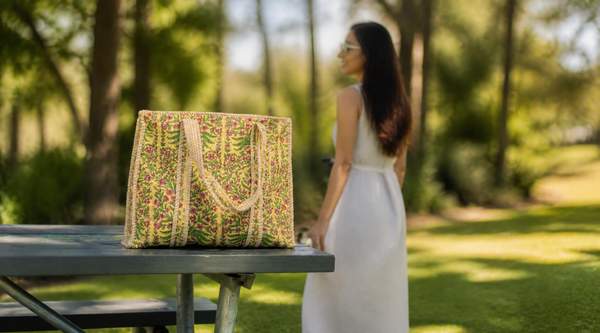
Xylk Lorena's luxury bag designs, printed on Filipino grocery totes, have sold out many times over, demonstrating that 'artisanal' value can emerge from innovative design and cultural reinterpretation, even with accessible materials, as reported by Harper's Bazaar. The brand's success illustrates a growing divergence in what constitutes 'artisanal luxury,' with some brands democratizing craft through material innovation while others double down on hyper-exclusive, traditional methods. The recontextualization of everyday items into desirable luxury accessories highlights a creative approach to craft.
Innovative application challenges traditional luxury definitions, which often prioritize heritage materials and established European craft traditions. Instead, Xylk Lorena creates a new category of desirable, handcrafted goods that resonate with a broader audience by blending local craft traditions with modern aesthetic sensibilities. The repeated sell-outs confirm a significant market appetite for items that bridge authenticity with contemporary relevance, even if they don't conform to classic luxury material standards.
The future of artisanal luxury isn't solely about heritage materials; it also encompasses innovative applications of craft that can broaden accessibility while maintaining authenticity. The approach allows brands to leverage global indigenous and local craft traditions for unique aesthetic differentiation. It simultaneously raises questions about the balance between cultural appropriation and genuine preservation, as brands navigate the delicate act of reinterpreting traditional forms for new markets.
Ultimately, 'artisanal' value can emerge from innovative design and cultural reinterpretation, even with accessible materials, creating a new category of desirable, handcrafted goods that resonate with a broader audience. It signifies an expansion of the luxury market, where the narrative of craft and cultural connection can be as powerful as the material itself, attracting a diverse range of consumers in 2026.
Why Artisanal Craftsmanship Matters for Luxury's Future
The luxury market demonstrates a profound willingness to pay a significant premium for extremely limited, labor-intensive items, as seen with Sarah Flint's $1,000 shoes selling for $1,500. A 50% premium above already high production costs shows that scarcity and perceived effort, not solely material cost, are the primary drivers of extreme luxury pricing. The observation fundamentally redefines what 'value' means to the affluent consumer, moving beyond mere utility or material worth to encompass exclusivity and the human story of creation.
For true artisanal luxury, the inherent inability to scale production is not a weakness but a strategic advantage. This deliberate limitationion creates an artificial scarcity that drives disproportionately high demand and profit margins on individual units, effectively turning limited output into a feature, not a bug. Sarah Flint's factories, producing only 150-200 pairs per day, confirm that controlled scarcity can lead to rapid sell-outs and enhanced profitability, defying conventional business models focused on maximizing volume.
Chanel's long-term strategy of acquiring nearly 30 artisan workshops since 1985 reveals that for established luxury houses, 'scaling' craftsmanship isn't about increasing output. Instead, it focuses on securing the very existence of unique skills, transforming supply chain preservation into a core brand asset. This ensures the continuation of specialized techniques crucial for their brand identity and product differentiation, safeguarding the intricate processes that define haute couture and high-end accessories.
The emergence of brands like Xylk Lorena, reinterpreting traditional craft with designs that sold out many times over, suggests that the future of artisanal luxury isn't solely about heritage materials. It also encompasses innovative applications of craft that can broaden accessibility while maintaining authenticity. This dual approach allows luxury brands to benefit from enhanced exclusivity and pricing power through traditional methods, while also exploring new avenues for handcrafted value and cultural relevance.
Ultimately, luxury brands benefit from enhanced exclusivity and pricing power through these strategies, while skilled artisans gain continued employment, recognition, and the preservation of their cultural heritage. Conversely, mass-produced 'luxury' goods that lack genuine artisanal depth are increasingly left behind. Consumers seeking high-quality, handcrafted items at accessible price points may also find their options limited, highlighting the widening gap in the luxury market in 2026.
What are the benefits of artisanal luxury accessories?
Artisanal luxury accessories offer distinct benefits, including enhanced exclusivity and a direct connection to cultural heritage, making each piece unique and highly desirable. The market's willingness to pay a 50% premium for extremely limited, labor-intensive items, such as Sarah Flint's $1,000 shoes selling for $1,500, demonstrates the significant value consumers place on scarcity and visible effort, translating into a strong investment for buyers.
How do traditional techniques add value to luxury goods?
Traditional techniques significantly add value by embedding unique skills and cultural narratives into luxury goods, elevating them beyond mere material cost. Chanel's strategy of acquiring nearly 30 artisan workshops since 1985 illustrates how preserving these specialized skills ensures the continuation of unique production methods, transforming supply chain security into a core brand asset and ensuring the authenticity of their handcrafted elements.
Where can I find authentic artisanal luxury accessories in 2026?
Authentic artisanal luxury accessories in 2026 can be found through brands that prioritize transparency and visible craftsmanship in their production. Examples include luxury houses like Louis Vuitton and Gucci, which bring artisans into retail stores to hand-stitch items, creating an experiential component for customers seeking genuine handcrafted quality and a direct connection to the craftspeople.
The strategic deployment of hyper-limited artisanal production by luxury brands like Sarah Flint, exemplified by her $1,000 shoes commanding a $1,500 price and selling out rapidly, demonstrates a clear shift in market dynamics. This approach prioritizes perceived value and premium pricing over sheer volume, even as it inherently limits output. For brands, this tactic secures enhanced exclusivity and pricing power, while simultaneously supporting skilled artisans and preserving cultural heritage.
By 2024, luxury brands are expected to further integrate these traditional techniques and experiential craft elements, solidifying exclusivity and justifying their extreme price points in a competitive market. The continued investment in unique craftsmanship, whether through acquisitions or visible in-store displays, suggests a future where authenticity and scarcity remain paramount, with brands like Chanel leading the way in preserving artisanal skills for generations to come.