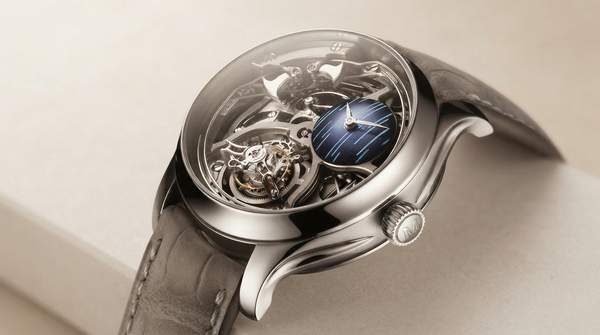
In the intricate world of luxury timepieces, the term "complication" signifies not a problem, but the zenith of watchmaking artistry and engineering. A complication is any mechanical function a watch performs beyond the simple display of hours, minutes, and seconds. These sophisticated additions, ranging from date displays to celestial trackers, transform a time-telling device into a miniature mechanical marvel. While many such features exist, two in particular stand out as pinnacles of historical ingenuity and modern craftsmanship: the Tourbillon and the Minute Repeater, each a testament to a watchmaker's ability to solve complex problems with nothing more than gears, springs, and levers.
What Defines a Watch Complication?
At its core, a watch complication is an additional feature built into the movement that enhances its functionality or demonstrates a manufacturer's technical prowess. According to an article by Richard Shults and Will Tygart for Borro, these mechanical additions are what elevate a luxury watch into a "miniature work of art and engineering." In the realm of horology, complexity is celebrated, and the presence of one or more complications adds layers of utility and value to a timepiece. The spectrum of complications is vast. Simpler ones might include a date window or a second time zone.
More advanced mechanisms can track moon phases, calculate the equation of time, or function as a stopwatch. The most revered timepieces, often called "grand complications," combine several of these highly complex mechanisms into a single watch. The famed Blancpain 1735, for example, incorporates a tourbillon, minute repeater, perpetual calendar, and split-chronograph, representing an ultimate expression of a brand's mastery over mechanical engineering. These creations connect the wearer to centuries of horological innovation and problem-solving.
The Tourbillon: Counteracting Gravity's Pull
While often discussed among the most elite complications, the tourbillon does not technically add a new function to the watch. Instead, it is a highly sophisticated device engineered to improve the watch's timekeeping accuracy by addressing a fundamental force of nature: gravity. Patented by the legendary watchmaker Abraham-Louis Breguet in 1801, the tourbillon was designed to solve a specific problem affecting the pocket watches of his era. As Mark Bernardo explains for Teddy Baldassarre, the tourbillon—French for "whirlwind"—was created to compensate for the "ill effects of gravitational pull on a watch movement's accuracy."
Because pocket watches were typically kept in a static vertical position in a waistcoat, gravity would exert a constant pull on the delicate balance and escapement, introducing slight timing errors. Breguet’s ingenious solution was to place these critical timekeeping components inside a rotating cage. This cage completes a full 360-degree revolution every minute, constantly changing the orientation of the escapement. This continuous motion effectively averages out the positional errors caused by gravity, theoretically leading to more precise timekeeping.
In a modern wristwatch, which is constantly in motion on the wearer's arm, the tourbillon's practical effect on accuracy is less critical, but it remains a powerful and mesmerizing demonstration of a watchmaker's skill.