Authenticating a vintage luxury scarf comes down to a structured, repeatable inspection across four checkpoints: how the material feels, how the piece is finished, what its labels say, and what condition it is in. No single test is definitive on its own, but a scarf that passes each stage — genuine silk that feels soft rather than plasticky, a hand-rolled hem rolling toward the front, era-appropriate labelling, and only minor vintage wear — is likely authentic and worth collecting. For anything ambiguous or expensive, professional authentication remains the final safeguard.
Introduction to Vintage Luxury Scarves
A scarf is widely considered the best entry point into vintage luxury collecting. Vintage specialists at BBR Vintage make the case plainly: the price range is more accessible than coats or bags, the pieces remain genuinely collectible, and condition issues are visible without trying anything on, since you can inspect the entire piece at a glance. Their assessment of vintage Burberry also notes that older scarves were made with heavier yarn weights and denser weaves than much current production, which is part of what draws collectors to earlier decades.
That accessibility is also what makes scarves a target for counterfeits, so a new collector needs a diagnostic routine rather than a single trick. The framework below works across both silk and wool, using Hermès and Burberry as worked examples of how brand-specific hallmarks fit into the same inspection sequence.
Diagnostic Framework: Material & Feel
Start with your hands, because luxury houses use high-end fibres and fakes usually cut corners here. Authentic luxury scarves are made from materials like pure silk, cashmere, wool blends, or fine cotton, and the texture should feel soft and refined — Grey Hall Design's authentication guide warns that a rough or plasticky hand-feel is a red flag, citing the silk-and-cashmere blend of popular monogram shawls, which carries a slight sheen.
For wool, calibrate your expectations to the fibre. Lambswool — the most common material in vintage Burberry scarves, according to BBR Vintage — is softer than standard sheep's wool but coarser than cashmere or merino, with a warm, slightly textured, dense hand-feel. Cashmere should feel noticeably softer. Labels usually state the fibre content, but hand-feel matters most when buying unlabelled pieces from sellers who may not know what they have.
Diagnostic Framework: Construction Details
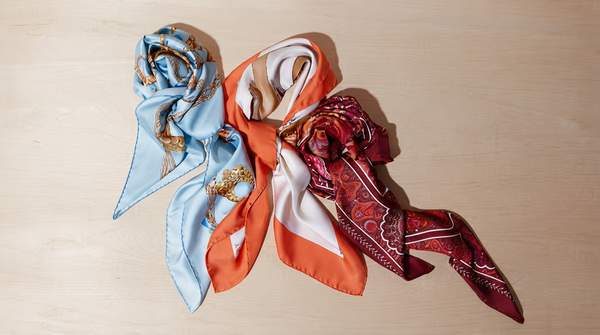
Construction is where the most decisive evidence lives, especially for silk. A genuine Hermès carré is defined by its rolled hem, produced by specialized seamstresses known as "rouleuses," and that hem always rolls toward the front of the scarf, giving the edge a subtle volume, as La Fille des Cordeliers explains. Machine-stitched edges, overlock stitching, or a roll toward the back are immediate counterfeit indicators.
Perfection is itself suspicious. An artisan might roll the edges of only seven scarves in a single day, according to The RealReal, whose Valuation Manager Hajleigh Nebeker notes: "Each scarf has hand-rolled edges. It's an expensive process that's hard to fake on counterfeit examples. Stitching also shouldn't be perfect, since it's also completed by hand." For vintage Burberry wool scarves, the fringe is the equivalent tell — authentic examples typically carry a specific fringe construction such as a three-strand twist, though fringe details vary by era and model, so comparison against documented examples of the same period is essential.
Diagnostic Framework: Branding & Labels
Labels and markings corroborate what your hands and eyes have already told you. Authentic luxury scarves often carry a copyright mark whose placement and style vary with the release year, so a mark alone is not proof — it has to match the era the seller claims. Counterfeiters also remove tags, so absence of a tag is not in itself an indication of a fake. As Nebeker puts it, tag designs evolve, which makes scrutinizing size, colour, stitching quality, and labelling together crucial rather than relying on any single attribute. On newer pieces, a care label sewn along an edge should clearly state the material, which lets you cross-check the stated fibre against what the fabric actually feels like.
Diagnostic Framework: Condition Assessment
Condition is the most forgiving checkpoint for collectors, because the main issues — stains, smells, holes, and fading — are visible and easy to spot, as BBR Vintage notes of Burberry scarves. Expect minor imperfections in any genuine vintage piece; they come with the age. What should change your decision is significant damage, which affects both the scarf's durability and its desirability as a collectible.
Because a scarf can be examined edge to edge, run through the full surface deliberately: check for loose seams or small tears that could worsen, confirm colours have not faded unevenly across the print, and verify the hem or fringe is intact. A piece that passes authentication checks but fails condition ones may still be a reasonable purchase if the damage is minor and priced into the sale — but that judgment should be conscious, not accidental.
Vintage Scarf Authentication & Care Framework
Work through this framework in order, accumulating evidence at each step. The result is a confidence judgment, not a certificate: a scarf that aligns across all four authentication dimensions is likely authentic, while mismatches at any stage justify closer scrutiny or a pass.
| Checkpoint | Silk scarves (e.g., Hermès) | Wool scarves (e.g., Burberry) |
|---|---|---|
| Material & feel | Soft, luxurious texture with a slight sheen; never rough or plasticky; thick twill with vibrant print | Lambswool feels warm, slightly textured, dense — softer than standard wool, coarser than cashmere |
| Construction | Hand-rolled hem rolling toward the front with subtle volume; hand stitching that is not perfectly uniform; machine or overlock stitching signals counterfeit | Specific fringe construction, such as a three-strand twist; compare against documented examples as fringe varies by era and model |
| Branding & labels | Copyright mark and tag styling should match the claimed release year; missing tag alone is not proof of a fake; material label should match the hand-feel | Label usually states fibre content; use hand-feel to confirm when the label is absent |
| Condition | Check for stains, smells, holes, fading, and loose seams; minor imperfections are normal in vintage, significant damage affects value | Same checks; the full piece is visible, so inspect the entire surface deliberately |
| Care & storage | Fragile silk may need professional dry cleaning and flat storage to prevent stretching | Store cool, dry, and dark; inspect regularly and address tears promptly |
Preservation Checklist: Care & Storage
Preservation advice from vintage clothing specialists at LAR Vintage is material-specific. Vintage silk or rayon pieces may need professional dry cleaning, while sturdier cottons from the 1950s and 1960s can often be gently hand-washed with a mild detergent. Avoid machine washing unless you are certain the item can withstand it, because agitation and harsh chemicals damage older materials and finishes.
Storage rules are simpler but non-negotiable: keep scarves in a cool, dry place away from direct sunlight to protect colours and fabric quality, and adapt to each piece — fragile silks and early synthetics may need flat storage to prevent stretching. Inspect regularly for loose seams, missing buttons, or small tears and address them promptly before they spread. Finally, buy from channels that authenticate before selling — resale platforms such as The RealReal, Vestiaire Collective, Rebag, and Fashionphile authenticate items through experts and typically offer an authenticity guarantee, which lowers the risk on vintage purchases.
Making an Informed Decision on Your Vintage Scarf
These authentication tips are guidance, not a substitute for professional authentication services, and brand-specific indicators like the Hermès hem or the Burberry fringe cover common examples rather than an exhaustive catalog. Pricing and valuation sit outside this framework entirely. But the decision it supports is straightforward: proceed with the purchase or add the piece to your collection when the scarf's characteristics consistently align with known authenticity indicators and its condition meets your personal standards; otherwise, seek professional authentication before committing. That measurable check — every checkpoint in the framework above passing, with only acceptable vintage wear — is what separates a confident acquisition from a hopeful gamble.
Sources
- Vintage Burberry Scarf Collector's Guide — Bbrvintage
- How to Authenticate Luxury Silk Scarves (2025 Guide) - Grey Hall Design
- 10 little-known facts about Hermès scarves — La Fille des Cordeliers
- How To Spot A Real Hermès Silk Scarf — The RealReal
- The Ultimate Vintage Fashion Guide: Shop Smart and Stay Stylish — LAR Vintage